

Translife Knowledge Centre
Pocket Bras & Secure Fit Guide
How to choose, insert and position breast forms securely in pocket bras for a comfortable, balanced and confidence-inspiring fit.
Understanding Pocket Bras
What Is a Pocket Bra — and Why Is It Different?
Pocket bras for breast forms look much like conventional bras, but each cup contains an internal fabric pocket designed to hold a breast form securely against the body.
That simple difference changes how the bra works. Instead of the breast form resting loose inside the cup, it sits within its own internal compartment. This can improve security, reduce unwanted movement and make it easier to keep both forms positioned consistently throughout the day.
The Basic Principle
The Pocket Holds the Form — the Bra Holds the Pocket
A pocket bra creates an extra layer between the breast form and the outer bra cup. The breast form is inserted into the internal pocket, while the bra band, cup and straps support the complete combination on your body.
The pocket is therefore mainly about retention and positioning. It does not replace correct bra sizing, and it cannot compensate for a band or cup that is fundamentally the wrong fit.
Why People Choose Them
The Main Benefits of a Pocket Bra
The greatest advantage is not simply that the bra has a pocket. It is the additional control that pocket can give over the position and movement of the breast form.
Greater Security
The internal pocket helps prevent a breast form from moving freely around the cup during normal wear.
More Consistent Positioning
Once fitted correctly, both forms can be easier to keep at a consistent height and position across the chest.
Reduced Rotation
A well-matched pocket can help reduce twisting or rotation, especially as you walk, sit or move.
Added Confidence
Knowing the forms are contained can make it easier to relax and concentrate on your day rather than constantly checking their position.
Important
A Pocket Bra Is Not a Substitute for Correct Fit
If the band is too loose, the cup is too small, the breast form is too large for the available space, or the pocket itself is overstretched, the result can still be unstable or uncomfortable.
Think of the pocket as an additional security system inside a correctly fitted bra — not as a way of forcing an unsuitable bra and breast form to work together.
Pocket Bra vs Conventional Bra
Both Can Work — but They Hold Breast Forms Differently
Conventional Bra
Breast Form Rests Directly in the Cup
- Can work very well when the cup and form are closely matched.
- Gives direct contact between the form and bra cup.
- May allow more movement if containment is limited.
- Stability depends heavily on band, cup shape and coverage.
Pocket Bra
Breast Form Sits Inside an Internal Pocket
- Adds an internal layer designed to contain the form.
- Can make positioning more consistent.
- Helps reduce unwanted movement and rotation.
- Still requires the correct band, cup and pocket capacity.
Secure Does Not Mean Restrictive
The Form Should Be Contained — Not Crushed
A correctly fitted pocket should hold the breast form without aggressively compressing it. The form still needs enough room to maintain its intended width, projection and profile.
If you have to stretch the pocket excessively, fold the form heavily or force it through the opening, that is a sign that the form and pocket may not be well matched.
Form sits fully inside the pocket
Pocket fabric lies smoothly
Form keeps its intended profile
Bra remains comfortable during movement
Who May Prefer a Pocket Bra?
Especially Useful When Security Matters to You
When you want your forms to remain in a predictable position for several hours.
When walking, travelling, shopping or socialising makes extra breast-form security reassuring.
When additional internal containment can help manage movement, provided the bra itself is supportive enough.
When knowing the forms are held inside dedicated pockets makes the whole experience feel more secure.
Key Point
The Pocket Adds Retention — the Correct Bra Fit Creates Stability
The best results come when the breast form, internal pocket, bra cup and band all work together. Get those relationships right and a pocket bra can provide a secure, comfortable and confidence-building way to wear breast forms.
Look Inside the Construction
Next we look more closely at how the internal pocket, breast form and outer bra cup interact, and why pocket construction matters for secure fit.
How Pocket Bras Work
How a Pocket Bra Holds a Breast Form Securely
A pocket bra works by combining four separate elements: the breast form, the internal pocket, the outer bra cup and the bra itself. Secure fit depends on all four working together rather than any one part doing all the work.
Understanding that relationship makes it much easier to diagnose problems such as movement, rotation, uneven height, flattening or a breast form that simply does not seem to sit properly inside the bra.
The Four-Layer System
Form → Pocket → Cup → Body
Think of a pocket bra as a small fitting system rather than just a bra with an extra piece of fabric sewn inside.
Breast Form
The form creates the width, height, projection and overall bust volume that the rest of the bra must accommodate.
Creates the shapeInternal Pocket
The pocket surrounds and contains the breast form, helping keep it in its intended position inside the cup.
Provides retentionBra Cup
The outer cup supports the pocketed form and influences its final contour, projection and appearance beneath clothing.
Shapes the resultBand & Straps
The band anchors the bra around the chest while the straps help stabilise the cups and fine-tune their position.
Anchors the fitThe Pocket's Real Job
Contain the Form Without Distorting It
The pocket should hold the breast form close enough to prevent unnecessary movement, but it should not compress, fold or distort the form simply to make it fit.
A good result is achieved when the breast form sits fully inside the pocket, the pocket fabric lies smoothly around it and the outer cup has enough room for the form to retain its intended profile.
This is why the best pocket bras for breast forms are not judged by pocket fabric alone. The pocket must also work with the available cup depth, cup width, bra construction and the size and shape of the form being worn.
A Well-Matched Pocket
- Holds the entire breast form securely.
- Allows the form to retain its natural projection.
- Does not create obvious folds or pressure points.
- Keeps the form from freely sliding around the cup.
- Allows both sides to be positioned consistently.
- Remains comfortable during normal movement.
Getting the Form Inside
The Pocket Opening Is Designed for Access — Not for Forcing
Pocket bras normally have an opening that allows the breast form to be placed between the inner pocket layer and the outer cup. The exact opening and construction can differ between bra designs.
Open the Pocket
Locate the internal opening and gently create enough space to insert the breast form.
Guide the Form Through
Ease the breast form through the opening rather than pulling aggressively on the pocket fabric.
Settle It Into Place
Once inside, gently position the form so it occupies the pocket evenly instead of remaining folded or twisted.
Check the Outer Cup
Make sure the cup lies smoothly over the pocketed form without flattening or squeezing it.
Pocket Size Is Only Part of the Story
The Breast Form Must Fit Both the Pocket and the Cup
A breast form may physically fit inside the internal pocket but still be too wide, too tall or too projected for the outer bra cup.
When that happens, the pocket may contain the form but the overall fit can still look or feel wrong. The cup may pull tight, flatten the form, create bulging around the edges or distort the finished silhouette.
Pocket Tension
Secure Is Different From Tight
Some stretch in the pocket fabric can help hold the form securely, but excessive tension is not a sign of better fit. If the pocket has to stretch dramatically around the form, it may pull the breast form out of shape or create pressure against the outer cup.
Form sits securely with the pocket fabric lying smoothly around it.
Pocket fabric is visibly straining or pulling hard across the breast form.
Form has excessive space to slide, rotate or settle unevenly inside the pocket.
The Pocket Does Not Choose the Position for You
You Still Need to Position the Breast Forms Correctly
The pocket helps preserve position once the breast form is placed correctly, but it does not automatically decide where the form should sit on your chest.
Height
Both forms should sit at a balanced and believable height rather than simply being pushed as high as possible.
Spacing
The forms should work with your chest width and bra construction instead of being forced unnaturally close together.
Angle
The form may need small positional adjustments so its shape follows the intended line of the cup.
Symmetry
Compare both sides from the front and at an angle, rather than relying only on how they feel.
A Note About Left and Right Forms
Most Breast Form Shapes Are Not Handed
Oval, Semi-Round and Triangular breast forms can generally be placed on either side because there is no dedicated left or right form.
Classic asymmetrical breast forms are different. They are specifically produced as a left and a right form, so the correct form must be used on the correct side for the shape and wing to sit as intended.
We will cover this more fully when we reach breast-form positioning later in the guide.
What Happens When You Move?
The Whole System Moves Together
Walking, sitting, bending and reaching place small forces through the bra. A well-fitted pocket bra helps the breast form move with the cup rather than independently inside it.
If the bra band is loose, the cup is oversized, the pocket is poorly matched or the form has not been positioned properly, movement can expose the weakness very quickly.
Key Principle
A Secure Pocket Bra Is a Partnership — Not a Container
The internal pocket helps retain the breast form, but the final result still depends on matching the form to the available pocket and cup space, positioning it correctly and anchoring the entire bra with a properly fitted band.
Fit Comes Before Fabric or Style
Next we look at the practical features that matter when selecting a pocket bra, including band fit, cup capacity, coverage, support and the specialist options available.
Choosing the Right Pocket Bra
Choose the Fit First — Then the Style
The best pocket bra is not simply the prettiest one or the one with the deepest-looking cup. It needs to fit your chest correctly, hold your breast forms securely and give the forms enough room to keep their intended shape.
When choosing pocket bras for breast forms, think about the whole combination: band fit, cup capacity, pocket size, coverage, strap support, breast-form shape and the finished silhouette you want to create.
Start With the Fundamentals
Five Things Matter More Than Colour or Decoration
A beautiful bra that does not fit the forms or your chest properly will never feel as secure as a correctly matched bra with the right construction.
Band Fit
The band should sit securely around the chest and remain broadly level rather than riding upwards at the back.
Cup Capacity
The cup must have enough width, height and projection to contain the pocketed breast form without crushing it.
Pocket Capacity
The internal pocket should accept the breast form comfortably without excessive stretching or bunching.
Coverage
Enough coverage can improve containment and help the breast forms remain stable during normal movement.
Support
Straps, side panels and overall bra construction need to cope with the weight and size of the chosen forms.
The Band Is the Foundation
A Secure Pocket Cannot Compensate for a Loose Band
Most of the bra's stability comes from the band around the chest. If the band moves excessively, the cups move with it and the breast forms can shift even when they are safely contained inside the pockets.
The band should feel secure but wearable. It should not require painful tightening to hold the bra in place.
Band stays broadly level around the body
Bra does not rotate easily around the chest
You can breathe and move comfortably
Cups remain in position when you raise your arms
Cup and Pocket Space
Fit the Breast Form — Not Just the Label on the Bra
Cup letters are only a starting point. The actual space available inside the bra is what determines whether your breast form will sit correctly.
Width
The form should sit within the usable width of the cup rather than pushing hard against the sides.
Height
Taller forms need enough vertical room to sit naturally without folding or being forced down.
Projection
More projected forms require enough cup depth to keep their intended front profile.
Volume
The complete form needs to fit without making the pocket or outer cup visibly strain.
Breast Form Shape Matters
Different Shapes Occupy the Pocket Differently
Two breast forms with a similar overall volume can still behave differently inside the same bra because their width, height and projection are not identical.
Oval, Semi-Round, Triangular and Classic asymmetrical forms each create a different footprint inside the cup. This is why a bra that works beautifully with one form may feel tighter or looser with another.
Practical Rule
Compare the actual form to the available pocket and cup space rather than assuming a cup letter guarantees the fit.Coverage and Support
More Coverage Can Give More Control
For many breast-form wearers, fuller cup coverage and supportive side construction can make the whole combination feel more stable, particularly with larger or heavier forms.
Helps contain more of the form and can reduce the chance of an edge moving above the cup line.
Can improve stability around the side of the chest and help distribute the load more comfortably.
Useful for fine-tuning cup height and helping manage the weight of larger breast forms.
Helps the cup maintain its shape instead of collapsing under the weight or projection of the form.
Translife Specialist Pocket Bras
Two Different Looks — the Same Secure-Fit Purpose
Translife offers specialist pocket bras designed for silicone breast forms. The two featured styles below give different looks while both providing dedicated internal pockets for the forms.
 Sophie Recommends
Specialist Pocket Bra
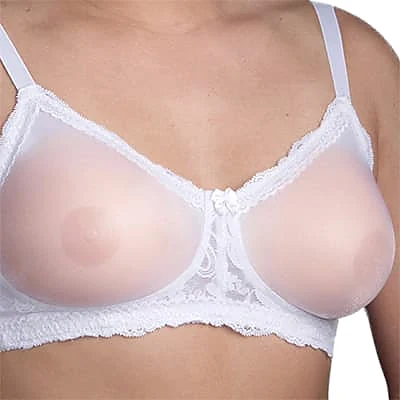
Transparent Pocket Bra
A sheer, lightweight pocket bra designed to hold Translife silicone breast-form styles securely while allowing the breast forms to remain visible through the outer cup.
- Internal pockets hold the forms securely
- Moulded stretch cups accommodate different form shapes
- Wide satiny straps help support the weight
- Full-coverage construction improves containment
This is Sophie's preferred option because it works well with all of the breast-form styles while the sheer finish adds a little more mystique to the overall look.
Specialist Pocket Bra
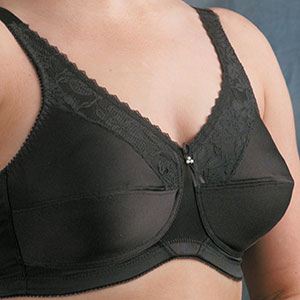
Satin & Lace Pocket Bra
A more traditional lingerie-style pocket bra with lace outer cups and internal pockets designed to hold silicone breast forms securely.
- Full-coverage pocketed construction
- Lace outer cups with internal cotton pockets
- Wide satiny elastic straps
- Wider sides help support and stabilise the fit
Which Style Might Suit You?
A Simple Comparison
| Feature | Transparent | Satin & Lace |
|---|---|---|
| Overall Look | Sheer and lighter | Traditional lingerie |
| Pocket Construction | Lightweight internal pocket | Cotton inner pocket |
| Coverage | Full coverage | Full coverage |
| Breast-Form Compatibility | Designed for Translife silicone breast-form styles | Designed for Translife silicone breast-form styles |
| Best When You Want | Security with a sheer, lighter appearance | Security with a more classic bra appearance |
Before You Decide
Ask These Questions
A pocket bra should be chosen around the breast forms you intend to wear and the result you want to create, not simply around a familiar bra size.
Does the band fit my chest securely?
Is there enough cup depth for my chosen breast forms?
Can the forms sit fully inside the internal pockets?
Does the cup give enough width and height?
Will the bra support the weight of the forms comfortably?
Does the finished shape work with the clothing I want to wear?
Key Principle
Fit the System — Not Just the Bra
The right pocket bra is one where your chest, the band, the breast forms, the internal pockets and the outer cups all work together. Once that foundation is right, style, colour and lingerie detailing become enjoyable choices rather than ways of trying to rescue a poor fit.
Check the Form Against the Available Space
Next we look more closely at how breast-form width, height, projection and volume affect the fit inside the pocket and outer bra cup.
Matching Breast Forms to the Pocket
The Breast Form Must Fit the Pocket — and the Cup
A breast form can fit inside the fabric pocket and still be wrong for the bra. Secure fit comes from matching the form’s width, height, projection and overall volume to the usable space inside both the pocket and the outer cup.
This is one of the most important parts of choosing pocket bras for breast forms because it explains why two forms that look similar in size can behave very differently inside the same bra.
The Core Rule
Fit the Actual Breast Form — Not the Expected Cup Letter
Bra cup labels are useful as a starting point, but they do not tell you the exact internal shape of the cup. Different bras with the same stated size can have different width, depth, height and construction.
The breast form itself is equally variable. Its labelled size does not tell you everything about how much room it needs inside a pocket bra.
Think in Dimensions
Width + Height + Projection + VolumeThose four measurements describe how the form occupies space far more accurately than relying on a cup letter alone.
The Four Dimensions That Matter
Look at the Shape in Three Dimensions
Breast forms are not flat objects. The way they sit inside a pocket depends on the amount of space they need across, up and down, and forwards.
Width
The side-to-side footprint of the form must fit within the usable width of the pocket and bra cup.
Height
Taller forms need enough vertical room so the upper and lower edges can settle naturally.
Projection
Projection is how far the form comes forward from the chest and therefore how much cup depth it needs.
Volume
Overall volume determines how much total internal space the form occupies once fully seated.
Shape Changes the Fit
Oval, Semi-Round, Triangular and Classic Forms Use Space Differently
Even when two forms create a broadly similar bust size, their footprint and projection can be different enough to change the way they fit inside the same pocket bra.
Flexible Orientation
Oval forms can often be positioned vertically or horizontally, which can change the way they occupy the available cup space.
Fuller Overall Profile
Semi-Round forms can create a full, rounded profile and may need sufficient depth as well as width.
More Frontal Projection
Triangular forms can create more projection towards the front, so cup depth can become especially important.
Wider, Handed Shape
Classic asymmetrical forms combine projection with an extended wing and are specifically made as left and right forms.
Two Fit Tests — Not One
First the Pocket, Then the Outer Cup
The form needs to pass two separate fit checks. The pocket must contain it properly, and the outer bra cup must still have enough room to support the complete pocketed form.
Check the Pocket
- Entire form sits inside
- Pocket fabric is not excessively stretched
- No heavy folding or bunching
- Form can settle into position
Check the Outer Cup
- Cup lies smoothly over the form
- Form keeps its intended profile
- No obvious bulging at edges
- No severe flattening or compression
Diagnosing the Fit
Signs the Breast Form May Be Too Large for the Bra
Pocket Fabric Strains
The internal fabric is visibly stretched hard across the form.
Form Looks Flattened
The outer cup compresses the form and reduces its intended projection.
Edges Push Out
Parts of the form are forced towards or beyond the usable cup area.
Cup Pulls Tight
The outer bra fabric appears under excessive tension.
Form Will Not Settle
You repeatedly reposition it because there is not enough usable space.
Bra Feels Unusually Restrictive
The whole front of the bra feels compressed once the forms are inserted.
Too Much Space Can Also Be a Problem
A Smaller Form Can Move Inside an Oversized Pocket or Cup
Secure fit is not achieved simply by choosing a larger bra. If the breast form has too much free space around it, it can slide, rotate, settle unevenly or leave empty areas in the cup.
Form shifts noticeably when you walk
Pocket fabric gathers around the form
Upper cup appears empty
Form rotates away from the intended position
Do Not Forget Your Chest
The Correct Form Also Has to Work With Your Body Proportions
The bra and pocket may technically contain a form, but the finished result should still work with your chest width, shoulders, waist, hips and the type of clothing you want to wear.
A Practical Matching Method
Change One Variable at a Time
If the combination is not working, avoid changing the form, bra size, strap length and position all at once. That makes it difficult to identify what actually improved the fit.
Insert the chosen form
Check pocket tension
Check cup width and depth
Position both forms
Movement-test the bra
Change only the weak point
Key Principle
The Best Match Preserves the Breast Form’s Shape
A breast form should sit securely inside the pocket while still looking like the shape it was designed to create. If the bra forces it flatter, narrower, twisted or heavily compressed, the combination is telling you that the available space is not right.
Get the Form Into the Pocket Without Twisting or Forcing It
Next we move from choosing the right combination to the practical process of inserting each breast form into the pocket and settling it correctly before the bra is worn.
Inserting Breast Forms
How to Put Breast Forms Into a Pocket Bra Correctly
A breast form should be guided into the internal pocket rather than forced through the opening. Taking a little time at this stage helps the form settle smoothly, protects the pocket fabric and makes accurate positioning much easier afterwards.
Pocket bras for breast forms can have slightly different internal constructions, but the basic principle is the same: open the pocket gently, support the breast form as you insert it, settle the complete form inside and check that nothing is folded, twisted or trapped.
Before You Start
Prepare the Bra and Breast Forms First
It is much easier to insert breast forms while the bra is laid out in front of you rather than trying to manipulate everything after the bra is already being worn.
Make sure the pocket opening is easy to see and that the forms are clean, dry and ready to wear.
Lay the bra flat with the cups facing you
Locate the opening of each internal pocket
Check that the pocket fabric is lying smoothly
Remove sharp jewellery that could catch the form
Check Before Inserting
Only Classic Asymmetrical Forms Are Specifically Handed
If you are wearing Classic asymmetrical breast forms, identify the left and right form before putting them into the pockets. Their extended shape is designed specifically for the appropriate side.
Oval, Semi-Round and Triangular breast forms are not left/right handed. Either form can be inserted into either side. Their final position or angle can then be adjusted to create the silhouette you want.
The Insertion Method
Six Steps to Seat the Breast Form Properly
Work gently and allow the pocket fabric to move around the form rather than trying to push the complete form through the opening in one movement.
Find the Opening
Open the Pocket Gently
Locate the internal opening and use your fingers to create enough room to begin inserting the form. Avoid pulling hard on a single point of the fabric.
Support the Form
Hold the Breast Form Securely
Support the body of the breast form as you handle it. Do not rely on pulling or tugging at a thin edge to move the entire weight of the form.
Introduce the Form
Ease One Section Through First
Guide part of the form through the pocket opening, then gradually work the remaining form inside. A little temporary flexing while inserting is quite different from forcing the form into a pocket that is fundamentally too small.
Seat the Form
Settle the Whole Form Into the Pocket
Once the form is completely inside, gently move it into the main area of the pocket so that no section remains trapped around the opening.
Smooth the Layers
Remove Folds, Twists and Bunching
Run your fingers gently over the pocket fabric and check that it lies smoothly around the form. The breast form itself should also be sitting flat against the back of the pocket rather than folded or twisted.
Repeat and Compare
Insert the Second Form
Repeat the same process on the other side, then compare both cups before putting the bra on. At this stage you are checking that both forms are fully contained — final positioning comes next.
If It Feels Difficult
Stop and Find Out Why — Do Not Simply Pull Harder
Some pocket openings are naturally smaller than the widest part of the breast form, so a little careful manipulation may be necessary during insertion. What you should not need is excessive force.
If the form is extremely difficult to insert, first check whether the pocket is twisted, whether you are using the intended opening and whether the breast form is simply too large for the available pocket space.
Do not stretch one small section of the pocket opening with the full weight of the form.
Handle the form carefully rather than digging nails into its surface or edges.
Do not tightly fold a form simply to make an unsuitable pocket accept it.
When Should You Insert the Forms?
Before Putting the Bra On Is Usually the Easiest Starting Point
For many wearers, inserting the breast forms while the bra is off makes it easier to see the pocket opening and check that the form is fully seated.
Bra Off
Easier to See and Control
- Pocket openings are easier to locate
- You can use both hands comfortably
- Easier to spot folds or bunching
- Both forms can be compared before dressing
Bra On
Useful for Small Final Adjustments
- Position can be fine-tuned against your body
- Easier to judge final bust height
- Useful for checking symmetry
- Better suited to adjustment than difficult insertion
Before You Put the Bra On
Do a Quick Five-Point Check
This takes only a few seconds and prevents many of the problems that can otherwise appear once the bra is being worn.
Is the entire form inside the pocket?
Is any part trapped at the opening?
Is the pocket fabric smooth?
Has the form returned to its intended shape?
Do both cups look broadly consistent?
Once the Bra Is On
Insertion Is Finished — Positioning Is Not
Getting a breast form into the pocket simply puts it in the correct compartment. You should still check its height, spacing and angle once the bra is being worn.
Small adjustments through the pocket fabric can make a significant difference to the finished bust line, especially when comparing the left and right sides in a mirror.
Common Insertion Mistakes
Problems to Correct Before Adjusting the Bra
Form Partly Outside the Pocket
An edge remains caught near the opening rather than the whole form sitting inside.
Re-seat the complete form.Pocket Fabric Is Twisted
The internal layer has wrapped or folded as the form was being inserted.
Smooth the fabric around the form.Form Is Folded
The breast form has not been allowed to return fully to its normal profile after insertion.
Settle it before putting the bra on.Wrong Classic Side
A Classic asymmetrical form has been inserted into the opposite side from the one for which it is designed.
Match left form to left and right to right.If the Form Keeps Fighting the Pocket
The Problem May Be Fit — Not Technique
If you repeatedly have to force, fold or compress the same breast form to get it into the pocket, return to the fit checks from the previous section.
Good technique cannot make an undersized pocket or cup suitable for a form that genuinely needs more room.
Repeated difficulty
Check pocket capacity
Check cup capacity
Reassess the combination
Key Principle
Guide the Breast Form Into the Pocket — Never Fight It
A correctly matched breast form and pocket should allow careful, controlled insertion without excessive force. Once both forms are fully seated and the pocket fabric is smooth, you are ready for the part that makes the biggest visual difference: positioning them correctly on your chest.
Turn a Secure Fit Into a Balanced Bust Line
Next we cover breast-form height, spacing and angle, how to position Oval, Semi-Round and Triangular forms, and the correct left/right orientation of Classic asymmetrical forms.
Positioning Breast Forms
Position Breast Forms for a Balanced, Natural-Looking Bust Line
Once your breast forms are securely inside the pockets, the next step is deciding exactly where they should sit on your chest. Small changes in height, spacing and angle can make a surprisingly large difference to the finished silhouette.
Pocket bras for breast forms help retain the position you choose, but the pocket does not automatically place each form perfectly. The best position is the one that works with your chest width, bra construction, breast-form shape and the clothing you intend to wear.
The Positioning Principle
Aim for Balance — Not a Fixed Measurement
There is no single universal distance or height that every pair of breast forms should follow. Bodies differ in chest width, shoulder width, torso length and natural symmetry, while bras and breast forms also vary in shape.
Instead of trying to reproduce a rigid measurement, use the bra and your overall proportions as visual guides.
Judge the Whole Silhouette
Height + Spacing + Angle + SymmetryThose four checks are more useful than trying to force every breast form into one predetermined position.
Four Positioning Checks
Look at Height, Spacing, Angle and Symmetry
Make your adjustments while wearing the bra so you can see how the complete combination sits on your body.
Height
The forms should sit at a believable level on your chest rather than automatically being pushed as high as the bra will allow.
Compare both sides from the front.Spacing
The distance between the forms should work with your chest width and the centre of the bra rather than being forced unnaturally close together.
Let your proportions guide the gap.Angle
Some forms can be rotated slightly within the pocket to alter how their width and fullness sit across the chest.
Small adjustments are usually enough.Symmetry
Aim for a visually balanced result rather than assuming that identical pocket positions always create identical appearance.
Your body itself may not be perfectly symmetrical.Finding the Right Height
Higher Is Not Automatically Better
One of the most common tendencies when first wearing breast forms is to position them very high on the chest. That can sometimes make the bust look disconnected from the rest of the torso or cause the upper edge of the form to sit too close to the neckline.
Allow the bra cups to give you a starting position, then look at the complete front and side profile. The bust should feel integrated with your torso rather than appearing to have been placed on top of it.
Bust appears unusually close to the collarbone or upper form edge becomes difficult to disguise.
Forms sit comfortably within the cups and work naturally with the length and proportions of the torso.
Forms settle towards the bottom of the cups and can make the bust appear heavy or unsupported.
Getting the Spacing Right
Do Not Force the Forms Together to Create Cleavage
Breast forms should work with the width of your chest and the bra cups. Trying to push them too far towards the centre can distort the forms, create pressure against the cup or leave the outer chest looking empty.
Forms Crowd the Centre
The inner edges may press together while the outer edges no longer sit comfortably within the cup.
Forms Follow the Chest
The bust appears centred within the bra while still respecting your natural chest width.
Forms Drift Towards the Sides
Excessive separation can make the centre of the bra look empty and may push the bust too far towards the arms.
Cleavage is not the test of correct positioning. Your anatomy, the shape of the breast forms, the bra and the amount of natural chest tissue all influence whether cleavage can be created comfortably. A balanced silhouette is more important than forcing the forms together.
Breast Form Orientation
Orientation Depends on the Shape of the Breast Form
This is where an important distinction needs to be made. Most Translife breast-form shapes are interchangeable between the left and right sides. Classic asymmetrical forms are not.
Either Form Can Be Worn on Either Side
Oval breast forms are not specifically left or right. They can also often be positioned more vertically or horizontally depending on the coverage and width you want to create.
Adjust the angle — not the side identity.Left and Right Are Interchangeable
Semi-Round forms can be worn on either side. Concentrate on keeping the rounded profile centred and balanced within each bra cup.
Position for symmetry and profile.Either Form Can Be Used on Either Side
Triangular breast forms are also interchangeable left to right. Their frontal projection and broader footprint should be centred within the available pocket and cup.
Check projection and cup alignment.These Forms Are Specifically Handed
Classic asymmetrical breast forms are supplied as a dedicated left and right form. The extended wing is designed to follow the appropriate side of the chest, so correct orientation matters.
Left form on the left — right form on the right.Classic Asymmetrical Forms
Why the Correct Left and Right Orientation Matters
The Classic design is asymmetrical because the form includes an extended wing rather than having the same outline on both sides. When worn correctly, that shape is intended to follow the chest towards the outer side.
If the left and right forms are reversed, the wing and projection can sit incorrectly inside the bra, making the bust harder to balance and potentially creating pressure or unwanted fullness towards the centre.
A Useful Feature of Oval Forms
Vertical and Horizontal Positioning Can Change the Silhouette
Because Oval forms are not handed, their orientation can be adjusted according to the shape you are trying to create and the space available inside the bra.
A more vertical position can emphasise height, while a more horizontal position can distribute more of the form across the width of the chest. The exact effect will depend on the individual form, bra and your proportions.
Can use more cup height and create a narrower footprint.
Can use more cup width and spread fullness further across the chest.
Fine-Tuning With the Bra On
Make Small Adjustments Through the Pocket Fabric
Once the bra is fastened, small adjustments are often all that are needed. Move the breast form gently through the fabric rather than removing and reinserting it after every tiny change.
Fasten the bra and settle the band into its normal position.
Check the height of both forms from the front.
Adjust the spacing so the forms work with your chest width.
Make any small angle adjustment appropriate to the form shape.
Check the profile from the side and three-quarter view.
Compare the result underneath the clothing you plan to wear.
Use More Than One View
The Front View Does Not Tell the Whole Story
A breast form can look balanced from directly in front while still sitting too high, too projected or at the wrong angle when viewed from the side.
Check height, spacing and left-to-right balance.
Check how the bust blends into the side of the chest.
Check projection, height and the overall line of the torso.
Check the silhouette under the actual garment you intend to wear.
Do Not Chase Perfect Geometry
Your Body May Need Slightly Different Positioning on Each Side
Shoulders, chest walls and torso shape are rarely perfectly identical from left to right. If one breast form needs a very small adjustment to create a visually balanced result, that does not automatically mean something is wrong.
Aim for visual balance and comfort rather than trying to make every distance mathematically identical.
Judge the final appearance on your body rather than the position of the forms when the bra is lying flat.
Common Positioning Errors
What to Look for Before You Start Changing Bra Size
Both Forms Too High
Lower them slightly and reassess the complete torso rather than just the neckline.
Forms Forced Together
Allow more natural spacing instead of sacrificing the outer cup fit in pursuit of cleavage.
One Side Higher
Recheck the form position and strap adjustment before assuming the cups are different.
Classic Forms Reversed
Confirm that the left Classic form is on the left and the right Classic form is on the right.
Form Rotates After Adjustment
This may point to excessive pocket space rather than simply poor positioning.
Correct Position Will Not Hold
Recheck the band, pocket fit and cup capacity before making endless positional adjustments.
Your Final Position Check
Five Questions Before You Move On
Do both forms sit at a believable height?
Does the spacing work with my chest width?
Are the forms sitting comfortably inside the cups?
Are Classic asymmetrical forms on the correct sides?
Does the silhouette look balanced from several angles?
Key Principle
Position for Your Body — Not for a Diagram
Correct breast-form positioning is about creating a balanced relationship between your body, the form and the bra. Use height, spacing, angle and visual symmetry to guide you. Remember that Oval, Semi-Round and Triangular forms are interchangeable between left and right, while Classic asymmetrical forms must be worn on their correct left and right sides.
Now Check Whether the Position Stays Put
A breast form can look perfectly positioned while you are standing still and then move once you start walking, sitting or reaching. Next we test the complete pocket-bra system in real-world movement.
Secure Fit, Movement & Everyday Wear
A Secure Fit Should Still Feel Comfortable When You Move
Breast forms can look perfectly positioned while you are standing still, but the real test begins when you walk, sit, bend, reach and wear the bra for longer periods.
Well-matched pocket bras for breast forms should help the forms move with the bra rather than sliding independently inside it. The aim is controlled movement and reliable positioning — not making the forms feel rigidly locked against your body.
The Movement Principle
Secure Does Not Mean Motionless
Your body moves, so the bra will move slightly with it. A secure fit means the band remains anchored, the cups stay controlled and the breast forms remain consistently seated within the pockets.
Small natural changes in position are different from forms sliding, rotating, dropping or repeatedly needing to be repositioned.
The Goal
Stable — Comfortable — PredictableYou should be able to move normally without constantly thinking about whether the breast forms are still in place.
What Creates Stability?
Four Parts of the Bra Work Together
If one part of the system is poorly matched, movement often exposes the problem very quickly.
Band
Anchors the bra around the chest and limits excessive movement of the cups.
FoundationContains the breast form and reduces unnecessary sliding or rotation within the cup.
RetentionCup
Supports the pocketed form and helps maintain the intended shape and position.
SupportStraps
Help stabilise the upper cup and fine-tune height without replacing the support of the band.
Fine AdjustmentThe Real-World Movement Test
Test the Bra Before You Rely on It for a Full Day
Once the forms are positioned, spend a few minutes moving in the same ways you are likely to move while wearing them.
Walk Normally
Walk around the room and check whether the forms remain centred and stable.
Sit Down
Check that the band does not ride dramatically upwards and the forms do not shift towards the centre.
Stand Up Again
The forms should return with the bra rather than remaining in a different position.
Bend Forward Slightly
Check that the forms remain contained and do not drop away from the cup.
Reach Forward
Extend both arms and make sure the bra remains anchored rather than pulling away from the chest.
Turn Side to Side
Gentle torso movement can reveal unwanted rotation or excessive movement inside the pocket.
What Good Stability Looks Like
The Forms Move With the Bra — Not Around Inside It
You are looking for consistency rather than absolute stillness. The breast forms should remain broadly where you positioned them even as the bra responds naturally to your body.
Band remains broadly level
Breast forms stay fully inside the pockets
No repeated rotation
No sudden dropping within the cup
Both sides remain visually balanced
Bra stays comfortable as you move
Movement Warning Signs
Repeated Movement Usually Tells You Something About the Fit
If you find yourself constantly reaching inside the bra to reposition the forms, the problem is rarely solved by simply adjusting them again and again.
Check band stability, pocket capacity and whether the cup is giving enough support from below.
Check whether there is excessive room around the form or whether the pocket is poorly matched to its shape.
If the whole bra shifts, the band is a more likely cause than the pocket itself.
Band Stability
If the Band Moves, the Breast Forms Move With It
The band is the main anchor of the bra. If it is too loose, the cups can rise, rotate or shift around the torso, which can make perfectly matched breast forms appear unstable.
Tightening the shoulder straps harder is not the correct way to compensate for a loose band. That often lifts the back of the bra and can make the cups sit incorrectly.
Secure around the body without needing painful tension.
May indicate the band is too loose or straps are carrying too much load.
Suggests the foundation is not anchoring the cups securely.
Shoulder Straps
Use Straps to Stabilise — Not to Carry Everything
Strap adjustment can improve the position of the upper cup, but straps should not need to be painfully tight to keep the breast forms in place.
Too Tight
Can pull the cups upwards, make the back band rise and create uncomfortable pressure on the shoulders.
Balanced
Straps help keep the upper cups stable while the band continues to provide the main anchor.
Too Loose
Can allow the upper cup to move, straps to slip and the overall bust position to feel less controlled.
Larger or Heavier Breast Forms
More Weight Makes Good Fit Even More Important
As breast-form volume and weight increase, the bra has more load to control. A stable band, suitable cup capacity, good coverage and supportive straps become increasingly important.
Larger forms should not require extreme tightness. If the only way to stop movement is to make the bra painfully restrictive, reassess the combination rather than simply tightening everything.
More Weight Needs
Everyday Wear
Comfort Over Time Matters as Much as the Mirror Test
A bra can feel acceptable for two minutes in front of a mirror and become uncomfortable after an hour. Give yourself enough time to judge the real fit.
Initial Check
Walk, sit and move normally. Look for immediate slipping, pinching or rotation.
Comfort Check
Reassess shoulder pressure, band comfort and whether the forms remain correctly positioned.
Practical Check
Notice whether you can simply get on with your day without repeatedly adjusting the bra or forms.
Test the Fit Under Clothing
Your Outfit Can Reveal Movement the Bra Alone Does Not
Once the pocket bra feels secure, put on the type of clothing you actually intend to wear. A fitted top, dress or blouse can make changes in position much easier to see.
Check the bust line from the front
Check projection from the side
Walk and sit in the complete outfit
Recheck whether both sides still look balanced
The Confidence Test
Good Security Lets You Stop Thinking About the Bra
One of the biggest benefits of a well-fitted pocket bra is not simply physical retention. It is the confidence of knowing that the forms are likely to remain where you positioned them while you walk, sit, talk and enjoy what you are doing.
If you are constantly checking, holding or repositioning the forms, treat that as useful fitting information rather than something you simply have to tolerate.
That is a much better goal than making the bra as tight as possible.
Quick Movement Diagnosis
Match the Symptom to the Most Likely Area to Check
| What You Notice | Check First | Then Check |
|---|---|---|
| Whole bra rides upwards | Band fit | Strap tension |
| Form slides inside pocket | Pocket capacity | Form-to-cup match |
| Form rotates | Excess pocket space | Position and form shape |
| One side sits higher | Form position | Strap adjustment |
| Forms feel compressed when moving | Cup capacity | Pocket tension |
| Straps dig into shoulders | Strap tension | Band support and total form weight |
Key Principle
Stability Should Come From Fit — Not Excessive Tightness
A good pocket-bra combination keeps breast forms predictably positioned during normal movement while still allowing you to breathe, sit, walk and wear the bra comfortably. If security depends on painful straps, an over-tight band or heavily compressed cups, the fit needs reassessing.
Diagnose the Problem Before Changing the Bra
Next we bring the fit, pocket, breast form, positioning and movement checks together so you can identify why something is not working and make the most useful correction first.
Common Pocket-Bra Problems & Solutions
Diagnose the Cause Before You Change the Bra
When breast forms move, sit unevenly or feel uncomfortable, the obvious reaction is often to tighten the bra or reposition the forms again. That can hide the symptom without solving the real problem.
Most problems with pocket bras for breast forms come back to one of five areas: band fit, cup capacity, pocket capacity, breast-form positioning or strap adjustment. Work out which part is causing the problem before changing anything else.
The Troubleshooting Principle
Treat the Symptom as a Clue
Sliding, rotation, compression, empty cup space and uneven positioning are all useful information. Each symptom points you towards a particular part of the bra-and-form system.
Change one thing at a time, retest the fit and keep the adjustment only if it improves both comfort and stability.
Troubleshooting Order
Band → Cup → Pocket → Position → StrapsStart with the foundation before making smaller adjustments.
Quick Diagnosis
Start With What You Can See or Feel
Use the symptom first, then check the most likely cause before moving on to the next possibility.
| What You Notice | Check First | Then Check |
|---|---|---|
| Whole bra rides upwards | Band fit | Strap tension |
| Breast form slides down | Pocket and cup support | Band stability |
| Breast form rotates | Pocket capacity | Position and form shape |
| One side sits higher | Form position | Strap adjustment |
| Form looks flattened | Cup capacity | Pocket tension |
| Empty space at top of cup | Form height and shape | Cup style and position |
| Pocket fabric bunches | Form-to-pocket match | Form position |
| Shoulder straps dig in | Strap tension | Band support and form weight |
Problem
The Bra Rides Up at the Back
What It Usually Means
The band may not be anchoring the bra firmly enough, or the shoulder straps may be pulling too much of the bra's weight upwards.
What to Check
- Is the band moving easily around your torso?
- Does the back rise noticeably above the front?
- Are the straps tightened excessively?
Try This
Reassess the band fit first. Then return the straps to a supportive rather than restrictive tension and retest.
Problem
The Breast Form Slides Down Inside the Cup
What It Usually Means
There may be too much usable space beneath or around the form, or the cup may not be supporting the pocket firmly enough from below.
What to Check
- Does the form fill the lower cup properly?
- Is the pocket much larger than the form?
- Is the band staying level?
Try This
Re-seat the form, check that the lower cup is supporting it and reassess whether the bra provides too much internal space for that particular form.
Problem
The Breast Form Keeps Rotating
What It Usually Means
The form may have too much room to move inside the pocket, or the pocket may not suit the form's footprint especially well.
What to Check
- Is there loose pocket fabric around the form?
- Does the form move when you turn your torso?
- Is the form correctly positioned before movement?
Try This
Reposition the form and retest. If rotation returns quickly, investigate the form-to-pocket match rather than continuing to reposition it.
If you are wearing Classic asymmetrical forms, first confirm that the left form is on the left and the right form is on the right. Oval, Semi-Round and Triangular forms are not specifically handed.
Problem
The Breast Form Looks Flattened or Compressed
What It Usually Means
The form may need more cup depth, more total volume or a pocket that does not stretch so tightly across it.
What to Check
- Does the cup pull tightly over the form?
- Has the form lost its normal projection?
- Is the pocket fabric under obvious tension?
Try This
Do not try to create more room by stretching the form or pocket harder. Reassess cup depth, cup volume and the size of the form.
Problem
There Is Empty Space at the Top of the Cup
What It Usually Means
The form may not provide enough upper height or fullness for that particular cup shape, or it may be sitting too low.
What to Check
- Is the form fully seated?
- Does a small upward adjustment improve the fit?
- Does the cup shape simply extend higher than the form?
Try This
Adjust the form position first. If the empty space remains, the form shape and cup style may simply be poorly matched.
Problem
One Breast Form Sits Higher Than the Other
What It Usually Means
One form may have settled differently, one strap may be tighter, or your body may require a slight difference in positioning from one side to the other.
What to Check
- Are both forms fully inside the pockets?
- Are the straps adjusted equally in effect?
- Is the bra itself level on your body?
Try This
Re-seat the forms, check strap tension and then make a small positional adjustment if needed. Visual balance is more important than identical measurements.
Problem
The Pocket Fabric Bunches or Folds
What It Usually Means
The form may not be fully seated, the pocket may be larger than the form or the internal fabric may have twisted during insertion.
What to Check
- Is any part of the form caught near the opening?
- Is the pocket twisted behind the form?
- Is there simply too much unused pocket fabric?
Try This
Remove and reinsert the form carefully, then smooth the pocket around it. Persistent excess fabric may indicate a size mismatch.
Problem
The Shoulder Straps Dig In
What It Usually Means
The straps may be overtightened or may be carrying more of the breast-form weight than they should because the band is not providing enough support.
What to Check
- Is the band staying level?
- Are the straps noticeably over-tightened?
- Are the forms particularly large or heavy?
Try This
Loosen the straps slightly and reassess the band. With larger or heavier forms, supportive construction becomes increasingly important.
Problem
The Bra Feels Secure but Uncomfortably Tight
What It Usually Means
Security may be coming from excessive compression rather than correct fit.
What to Check
- Can you breathe and move comfortably?
- Are the forms visibly compressed?
- Is the band painfully restrictive?
Try This
Reassess the whole fit. A secure pocket bra should not need painful band or strap tension to keep the forms in place.
Problem
The Forms Look Right at First but Will Not Stay There
What It Usually Means
The position itself may be fine, but the bra is not retaining it during movement.
What to Check
- Does the whole bra move?
- Do only the forms move inside the pockets?
- Does movement begin only during particular actions?
Try This
Decide whether the problem belongs to the band, pocket or cup before changing the form position again.
The One-Change Rule
Change One Variable — Then Retest
If you change the band position, strap length, breast-form position and cup size all at once, you will not know what actually corrected the problem.
Sometimes the Bra Is Not the Only Problem
Reassess the Combination — Not Just One Component
A good pocket bra can still perform poorly when paired with a breast form that is too wide, too projected, too small or simply the wrong shape for the available pocket and cup.
Equally, an excellent breast form cannot compensate for a band that moves around the torso or a cup that does not have enough internal space.
Secure fit comes from the combination working together.
Stop and Reassess
These Are Not Signs to Simply Tighten Everything
Painful Band Pressure
Security should not depend on a band that is painfully restrictive.
Severe Shoulder Pressure
The straps should not have to carry the entire weight of the bra and breast forms.
Form Heavily Distorted
A form that is constantly flattened or folded needs more suitable space.
Repeated Repositioning
If the same problem returns immediately, investigate the fit rather than repeating the adjustment.
Final Troubleshooting Check
Before You Decide the Bra Does Not Work
Is the band stable and broadly level?
Do the forms fit the cups without heavy compression?
Are both forms fully seated inside the pockets?
Are the forms positioned appropriately for your chest?
Are the straps supportive rather than overtightened?
Does the problem still appear during a movement test?
Key Principle
Fix the Cause — Not Just the Symptom
Repeated slipping, rotation, compression or discomfort is useful information. Work systematically through the band, cup, pocket, breast-form position and straps until you find the real cause. A well-matched system should feel secure without needing constant adjustment.
Pocket Bras Are Useful — but They Are Not the Only Option
Next we look at other ways breast forms can be worn, when a conventional bra may work perfectly well and why the best choice depends on the forms, the outfit and your own comfort.
Alternatives to Pocket Bras
Do You Always Need a Pocket Bra for Breast Forms?
No. Pocket bras for breast forms provide useful security and consistent positioning, but they are not the only way to wear silicone breast forms successfully.
A well-fitting conventional bra can work extremely well when the breast form is correctly matched to the cup and remains stable during movement. Other approaches may also be suitable depending on the breast form, your clothing, how long you intend to wear it and the level of security you want.
The Main Principle
Choose the Method That Gives You the Fit and Security You Need
A pocket bra adds an internal retention layer around the breast form. That can be particularly reassuring when you are moving around, going out or wearing forms for longer periods.
But if a conventional bra already holds the form comfortably, securely and in the position you want, there is no need to change simply because it does not contain a pocket.
Ask One Question
Does the complete combination stay secure and comfortable?The result matters more than whether the bra carries a particular label.
Option 1 — Conventional Bras
A Standard Bra Can Hold Breast Forms Very Successfully
Breast forms do not automatically require specialist pockets. If the band is stable, the cups match the forms and there is enough coverage to contain them, a conventional bra can give a very good result.
The main difference is that the form rests directly inside the cup rather than being surrounded by a separate internal fabric layer.
- The breast form fills the cup correctly
- The band stays stable during movement
- Cup coverage keeps the form contained
- The form does not repeatedly slide or rotate
- Forms move noticeably during normal activity
- The cup has limited coverage
- The forms are larger or heavier
- You want the reassurance of additional containment
Pocket Bra or Conventional Bra?
Neither Is Automatically Better in Every Situation
| Consideration | Conventional Bra | Pocket Bra |
|---|---|---|
| Form retention | Depends mainly on cup fit and coverage | Adds an internal containment layer |
| Direct form contact | Form normally rests directly against the body or bra cup | Pocket fabric sits around the form |
| Rotation control | Depends strongly on cup fit | Pocket can help reduce unwanted movement |
| Bra choice | Wider range of conventional styles | Specialist pocketed construction required |
| Going out or longer wear | Can work very well when fit is secure | Additional retention can provide reassurance |
| Main requirement | Correct band, cup and form match | Correct band, cup, form and pocket match |
Option 2 — Adhesive-Compatible Breast Forms
Some Breast Forms Can Be Attached More Directly to the Body
Certain breast forms are specifically designed for adhesive use, or their manufacturer may permit use with a compatible breast-form adhesive system.
This can create a different wearing experience because the form is retained partly by attachment to the chest rather than relying entirely on the bra.
Always follow the care and wearing instructions supplied for the specific breast form. An unsuitable adhesive or incorrect removal method could damage the outer membrane or surface of some forms.
Adhesive Does Not Necessarily Replace the Bra
Attachment and Support Are Two Different Jobs
An adhesive system may help keep a form against the chest, but the bra can still provide support, shaping, positioning and clothing compatibility.
With larger or heavier forms in particular, do not assume that attachment alone removes the need for appropriate support.
Helps retain the form against the chest.
Helps control position, weight and silhouette.
Option 3 — Let the Outfit Help
Clothing Can Add Reassurance — but Should Not Rescue a Poor Bra Fit
A fitted dress, camisole, shapewear layer or supportive top can sometimes reduce visible movement and help the complete outfit feel more secure.
Useful Extra Layer
A garment can help keep the bra close to the body and smooth the finished silhouette.
Outfit-Specific Security
A combination that is perfectly suitable beneath one dress may behave differently beneath a loose blouse.
Not a Fit Correction
Clothing should not have to compress an unstable bra aggressively simply to stop the forms moving.
When Bra Style Changes the Decision
Lower-Coverage Styles Need More Careful Form Control
A fuller-coverage bra naturally surrounds more of the breast form. Balconette, plunge and other lower-coverage styles may expose more of the form or offer less containment.
That does not automatically make them unsuitable, but it makes the form-to-cup match, movement test and clothing check more important.
As Coverage Reduces
Fit and Movement Testing Become More ImportantWhich Method Should You Choose?
Match the Retention Method to What You Are Actually Doing
At Home
Comfort May Be the Priority
If a conventional bra holds the forms comfortably and you are not experiencing movement problems, additional retention may offer little practical benefit.
Going Out
Reliability Becomes More Important
A pocket bra can provide extra reassurance when you want the forms to remain consistently positioned while walking, sitting and moving around.
Longer Wear
Comfort and Stability Must Work Together
Choose the system that stays secure without creating pressure, painful straps or excessive compression over time.
Particular Outfit
Let the Neckline and Silhouette Influence the Choice
The best bra for one outfit may not be the best for another. Judge the complete dressed result rather than choosing the bra in isolation.
Think in Levels of Retention
Use as Much Security as You Need — Not as Much as Possible
More containment is not automatically more comfortable or more appropriate. Start with a correct bra and breast-form fit, then add retention only where it provides a genuine benefit.
The foundation of every option.
Adds internal containment where useful.
Used only when appropriate for the form and situation.
Your Decision Checklist
Six Questions to Ask
Does my current bra hold the forms securely?
Do the forms stay positioned when I move?
How long will I be wearing them?
Does my chosen outfit need a particular bra style?
Would an internal pocket give me useful extra confidence?
Is any adhesive method specifically approved for my breast forms?
Key Principle
Pocket Bras Are a Specialist Option — Not a Compulsory One
The best method is the one that keeps your breast forms comfortable, balanced and predictably positioned for the way you want to wear them. A conventional bra may be entirely suitable; a pocket bra can add valuable containment; and some forms may support other wearing methods when their manufacturer specifically permits them.
Bring the Complete Secure-Fit Process Together
The final section answers the most common practical questions and brings together choosing, matching, inserting, positioning and securing breast forms in one simple sequence.
Pocket Bra FAQ
Common Questions About Pocket Bras for Breast Forms
Pocket bras can make wearing breast forms feel more secure and predictable, but the best result still depends on matching the bra, pocket and breast form correctly and positioning everything well on your body.
Do I need a pocket bra to wear breast forms?
No. Many breast forms can be worn successfully inside a correctly fitting conventional bra. A pocket bra adds an internal layer that helps contain the form and can reduce unwanted movement or rotation.
What is the main advantage of a pocket bra?
The main advantage is retention. The internal pocket surrounds the breast form and helps it remain consistently positioned while you move, sit and go about your day.
Does the pocket itself support the breast form?
The pocket primarily contains the form. The bra band and cup provide the main support, while the pocket helps keep the breast form securely located within that structure.
Should a breast form fit tightly inside the pocket?
It should be securely contained without being excessively compressed. A pocket that is too small can flatten or distort the breast form, while one that is too large may allow unnecessary sliding or rotation.
Can I use any size breast form in the same pocket bra?
Not necessarily. The pocket and outer cup both have finite space. Breast-form width, height, projection and overall volume all affect whether a particular combination will fit correctly.
Why does my breast form rotate inside the pocket?
Repeated rotation often means there is too much room around the form, the pocket is poorly matched to its shape or the bra itself is moving. Reposition the form, then movement-test the complete bra to identify where the instability begins.
Should I insert breast forms before putting the bra on?
For many people this is the easiest method because the pocket opening is easier to see and the breast form can be fully seated before dressing. Small final positioning adjustments can then be made once the bra is being worn.
How do I know when the breast form is fully inside the pocket?
The whole form should be enclosed, no edge should remain trapped at the opening, the pocket fabric should lie smoothly around it and the form should have returned to its normal shape.
Are all breast forms left and right handed?
No. Oval, Semi-Round and Triangular breast forms are interchangeable between the left and right sides. Classic asymmetrical forms are specifically handed and must be worn as the correct left and right form.
Can Oval breast forms be positioned differently?
Yes. Oval forms can often be positioned more vertically or more horizontally depending on the cup, your chest width and the silhouette you want to create.
How high should breast forms sit?
There is no universal measurement. Use your torso length, chest width, bra position and overall silhouette as guides. Breast forms that are positioned very high can look disconnected from the rest of the torso.
Should I push breast forms together to create cleavage?
Not if doing so distorts the forms or compromises the cup fit. Your anatomy, chest width, breast-form shape and bra construction all affect cleavage. A balanced bust line is more important than forcing the forms together.
Why does the whole bra move when I walk?
If the entire bra moves rather than just the breast forms, check the band first. The band is the main anchor of the bra, so a loose or unstable band can allow the cups and forms to move around the torso.
Should I tighten the straps to stop breast forms moving?
Not excessively. Shoulder straps help stabilise the upper cups, but they should not replace the support of the band. Overtightening them can pull the bra upwards and create unnecessary shoulder pressure.
Are pocket bras better for larger breast forms?
They can provide useful additional retention, particularly with larger or heavier forms. Good band support, suitable cup capacity and appropriate coverage remain essential, because the pocket alone cannot carry the weight.
Why does my pocket fabric bunch around the breast form?
The form may not be fully seated, the pocket may have twisted during insertion or there may be more pocket space than the form needs. Remove and reinsert the form carefully before deciding that the bra itself is unsuitable.
Can I wear adhesive breast forms instead of using a pocket bra?
Some forms are specifically designed or approved for adhesive use. Always follow the instructions for the individual breast form and any compatible adhesive system rather than assuming that adhesive is suitable for every silicone form.
How do I know when my pocket bra fits properly?
The band should remain stable, the forms should fill the cups without heavy compression, the pockets should contain them smoothly and the complete combination should remain comfortable and balanced during normal movement.
Specialist Pocket Bras
A Pocket Bra Can Add Valuable Reassurance
The specialist pocket bras offered by Translife are designed specifically to work with silicone breast forms. The Transparent Pocket Bra is particularly versatile because its internal construction works well with the different breast-form styles while the sheer outer appearance keeps the finished look lighter and more feminine.
The Complete Secure-Fit Process
Seven Steps From Choosing the Bra to Wearing It With Confidence
The entire guide can be reduced to one practical sequence.
Start with a bra that fits your body and provides suitable coverage and support.
Match breast-form width, height, projection and volume to the pocket and cup.
Guide each form gently into the pocket without forcing or heavily folding it.
Adjust height, spacing and angle to suit your chest and the form shape.
Check that the band, cups, pockets and straps work together to retain the forms.
Walk, sit, bend, reach and turn to test the combination in realistic movement.
If something moves or feels uncomfortable, diagnose the cause before changing multiple things.
What Good Pocket-Bra Fit Feels Like
Secure Enough to Trust — Comfortable Enough to Forget
The best pocket-bra fit is not the tightest one. It is the combination that keeps the breast forms predictably positioned without constantly reminding you that you are wearing them.
Stable band
Smooth pocket
Balanced bust line
Comfortable straps
Controlled movement
Confidence when wearing
Guide Summary
Understand → Choose → Match → Insert → Position → Secure → Troubleshoot
Pocket bras provide a specialist way of containing breast forms, but good results come from the complete system rather than the pocket alone.
Start with a stable bra, match the actual breast form to the available pocket and cup, insert it carefully, position it for your proportions and then movement-test the result. When something does not feel right, use the symptom to find the cause instead of simply tightening everything.
Remember
Fit Creates Stability.The Pocket Adds Retention.
Both have to work together.
Final Orientation Reminder
Not Every Breast Form Has a Left and Right Side
Oval, Semi-Round and Triangular breast forms are interchangeable between left and right. Position them according to the bra, your chest and the silhouette you want.
Classic asymmetrical breast forms are specifically handed. The left form belongs on the left and the right form belongs on the right.
Guide Complete
Pocket Bras & Secure Fit
You now have the complete process for choosing a pocket bra, matching it to your breast forms, inserting and positioning the forms correctly, checking security during movement and diagnosing common fit problems.