Silicone Breastplate Guide
High neck or sculpted neck? A practical guide to choosing the right style, cup size, filling, colour and fit for a comfortable and convincing feminine silhouette.
What is a silicone breastplate?
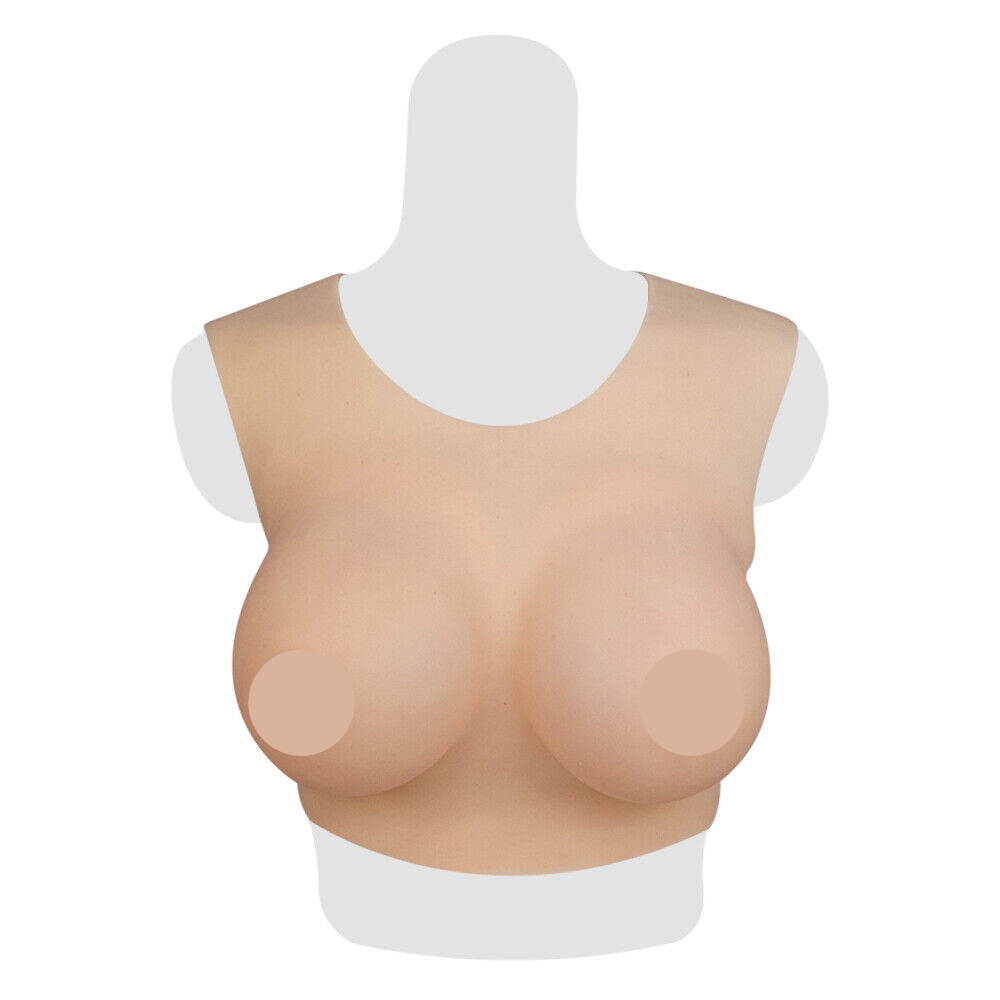
A silicone breastplate combines the breasts and surrounding chest into one wearable piece, creating a more complete upper-body transformation than individual breast forms.
Unlike individual breast forms, which are normally selected to add volume to your own chest, a silicone breastplate is generally chosen by the finished cup size you want to create. That does not mean cup size should be the only consideration.
Each manufacturer will normally provide a fitting guide covering measurements such as chest and neck size. Study these measurements carefully. Breastplates stretch, but different designs will not feel equally comfortable on every body shape, and a breastplate that is too tight around the chest or neck can quickly become unpleasant to wear.

High Neck Silicone Breastplates
A traditional high neck breastplate extends further up the neck, giving greater silicone coverage between the bust and your natural skin. This can help create a more continuous chest and neckline, particularly for photography or when your clothing disguises the outer edges.
The trade-off is the additional silicone around the neck. Some wearers appreciate the extra coverage; others find a high neck warmer or more restrictive, particularly during longer periods of wear.
Sculpted Neck Silicone Breastplates
A sculpted neck breastplate finishes lower around the base of the neck rather than continuing upwards into the taller collar of a traditional high neck design.
For many wearers this makes the breastplate feel less restrictive. The lower transition line can also be easier to incorporate into an outfit: a carefully selected ornate, chunky or statement necklace can help disguise the edge while becoming an attractive part of the finished look.
The compromise is that more of the transition between silicone and natural skin may be visible, making your choice of clothing, jewellery and breastplate colour particularly important.
Choosing Cup Size and Getting the Fit Right
Start with the bust you want
Breastplates are commonly offered by finished cup size. Decide whether you want a more restrained bust or a fuller silhouette, but remember that the cup letter describes the breasts rather than guaranteeing that the breastplate body will fit you.
Then check your body measurements
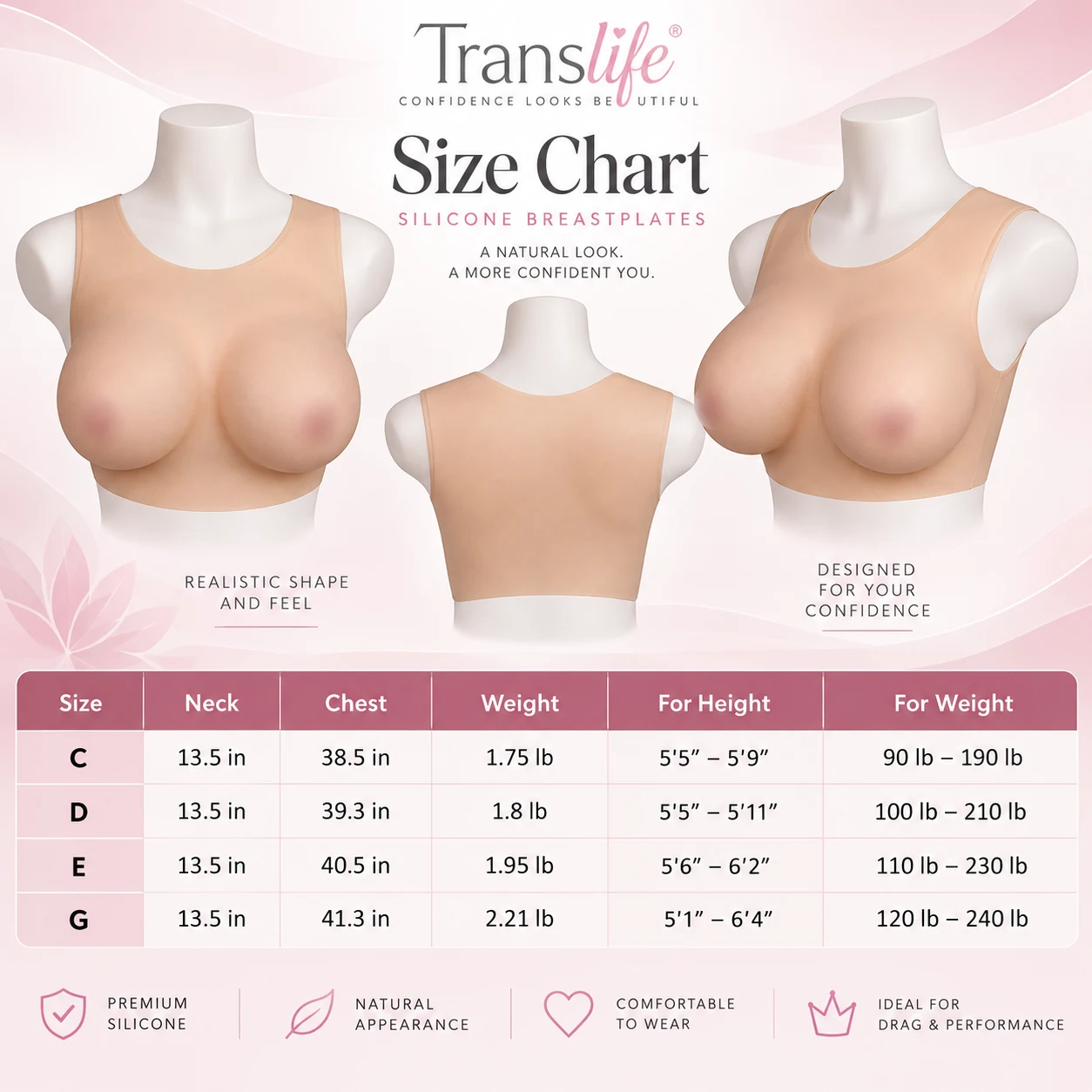
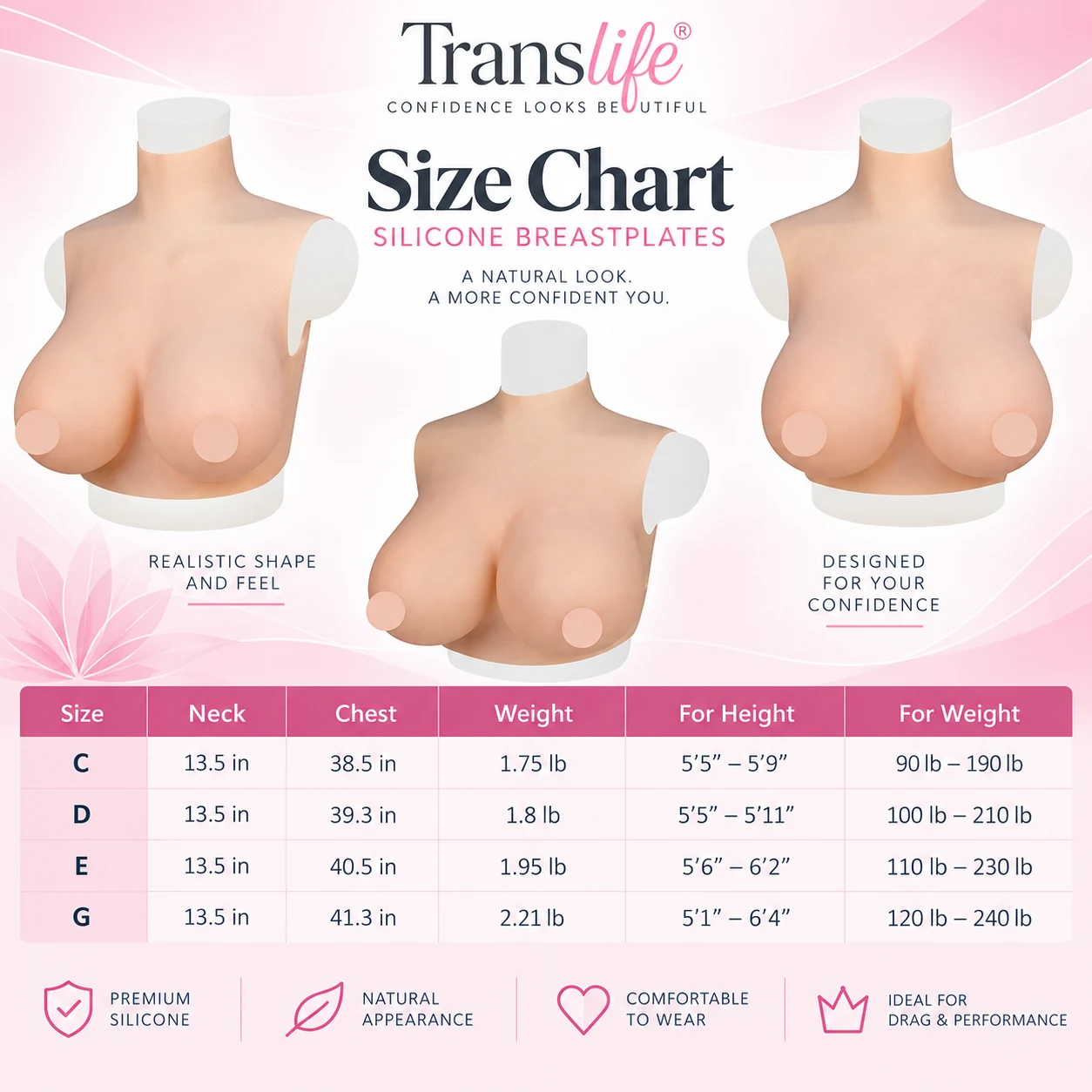
Study the manufacturer's size chart for neck, chest and any other stated measurements. Designs differ in stretch, body dimensions and neckline. A cup size that suits you in one model does not automatically mean another manufacturer's breastplate will fit comfortably.
Two Breastplate Size Chart Examples
These examples demonstrate why the manufacturer's measurements matter. Although a breastplate may be sold by cup size, the recommended neck, chest, height and wearer measurements can vary from one design to another. Use the chart supplied for the exact breastplate you are considering rather than assuming that the same cup size will fit identically across different styles.
Silicone Filled or Lightweight Filled?
Silicone filled
Silicone-filled breasts provide greater weight, substance and movement. They can feel more convincing, but the additional realism comes with additional weight.
This becomes increasingly important as cup size increases. A large G cup filled with silicone can be surprisingly heavy, particularly during extended wear.
Cotton or lightweight filled
Lightweight-filled breastplates retain the overall breastplate shape while substantially reducing the weight you need to carry. They are worth serious consideration if comfort and longer wearing periods matter more to you than the extra weight and movement of silicone filling.
Choosing the Right Breastplate Colour
Colour matching can be one of the more difficult aspects of choosing a silicone breastplate. Product photographs, screen settings and lighting can all change how a shade appears before it reaches you.
Aim for the closest practical match to the skin that will remain visible around the breastplate. Do not automatically assume the palest shade will look the most natural.
Putting a Silicone Breastplate On
Read the manufacturer's fitting instructions before attempting to put your breastplate on. Silicone is flexible, but it needs to be handled carefully around openings, edges and thinner areas.
Breastplates can roll as they are pulled into position, and the material can bunch or fold at the back. Correcting this once the breastplate is partly fitted can be surprisingly awkward, especially when dressing alone.
Following the recommended fitting method usually makes the process easier and helps avoid unnecessary pulling or stretching.
Reducing the Artificial Shine
Silicone can sometimes have a noticeable surface shine, particularly under strong lighting. Some people apply makeup directly to their breastplates to alter the colour or finish, but I would not recommend this as a general solution.
Cosmetics may react differently with silicone and can potentially create staining, residue or cleaning problems. Unless the manufacturer specifically confirms that a product is suitable, it is better not to experiment.
A very light application of talc or translucent powder can sometimes help soften excessive surface shine. Use it sparingly and always check the breastplate manufacturer's care recommendations first.
How Realistic Are Silicone Breastplates?
Silicone breastplates can produce an impressive transformation, but it is worth being realistic about what they can and cannot do.
I find them particularly effective for photographs, where clothing, pose, jewellery and controlled lighting all contribute to the finished appearance. They can also be very useful for clients who are unable to create cleavage naturally but would like the freedom to wear more revealing feminine garments.
At very close range or in unforgiving natural daylight, however, I would not describe them as ultra-realistic. The transition edges, colour differences, surface texture and character of silicone can still be visible.
The best results usually come from treating the breastplate as one part of the complete presentation, rather than expecting the breastplate alone to create the transformation.
Breastplates Are Not the Only Option
A silicone breastplate concentrates primarily on the bust and upper chest, but there are more extensive silicone bodywear options if you want the transformation to continue further across the body.
Silicone Torso Body Suits
A silicone torso suit provides considerably more body coverage than a breastplate and can create a more integrated torso silhouette. Fit, weight, warmth and the way the suit is put on all become increasingly important as the amount of silicone increases.
Full-Length Silicone Ladies Body Suits
Full-length silicone body suits extend the transformation much further. They offer another option for people seeking more extensive body shaping, but they also introduce additional considerations around sizing, weight, heat, movement and dressing.
Sophie's Personal Choice
My own preference is the sculpted neck breastplate.
I find it less restrictive around my neck than the traditional high neck version, and I find the lower transition line a little easier to hide with a well-selected necklace. I also tend to choose Nude, or a Shade 2 equivalent, because it works better with my own skin tone.
That is very much a personal choice rather than a rule. Another wearer may find that the additional coverage of a high neck design works much better for them. Whichever style you choose, spend time checking the manufacturer's measurements, think carefully about the weight of the filling, and choose for your own body and the way you actually intend to wear it.
Sophie Summers — Translife
High Neck or Sculpted Neck?
Consider high neck if…
Greater upper-chest and neck coverage is your priority and your intended clothing works comfortably with the higher neckline.
Consider sculpted neck if…
You prefer less restriction around the neck and want the option of disguising the lower transition with a carefully chosen necklace.
In either case, the best breastplate is not simply the one with your preferred cup size. Check the manufacturer's neck and chest measurements, consider the weight of the breast filling, choose the most suitable colour and think about the clothing you intend to wear with it.
Silicone Breastplate FAQs
How do I choose a silicone breastplate size?
Choose the finished cup size you want, then carefully check the manufacturer's neck, chest and other stated body measurements. Breastplate dimensions vary between manufacturers and styles.
Is a high neck or sculpted neck breastplate better?
Neither is universally better. High neck designs provide greater coverage, while sculpted neck designs can feel less restrictive and their lower transition can often be incorporated into an outfit with suitable jewellery.
Are silicone-filled breastplates heavy?
They can be, particularly in larger cup sizes such as G cups. A lightweight-filled version deserves consideration when extended wearing comfort is a priority.
Can I put makeup on a silicone breastplate?
Sophie does not generally recommend it. Check the manufacturer's instructions before applying cosmetics or other products, as unsuitable products may leave residue, stain the surface or make cleaning more difficult.
How can I reduce shine on a silicone breastplate?
A small amount of talc or translucent powder may help soften excessive shine, provided the manufacturer's care instructions permit it.
Choose for your body, not just your cup size
A breastplate can be a very effective part of a feminine transformation when the style, fit, filling and colour are chosen carefully. Manufacturer measurements and care instructions should always take priority over assumptions based on cup size alone.