Translife Crossdressing Knowledge Centre
The Difference Between Tights, Stockings and Hold-Ups
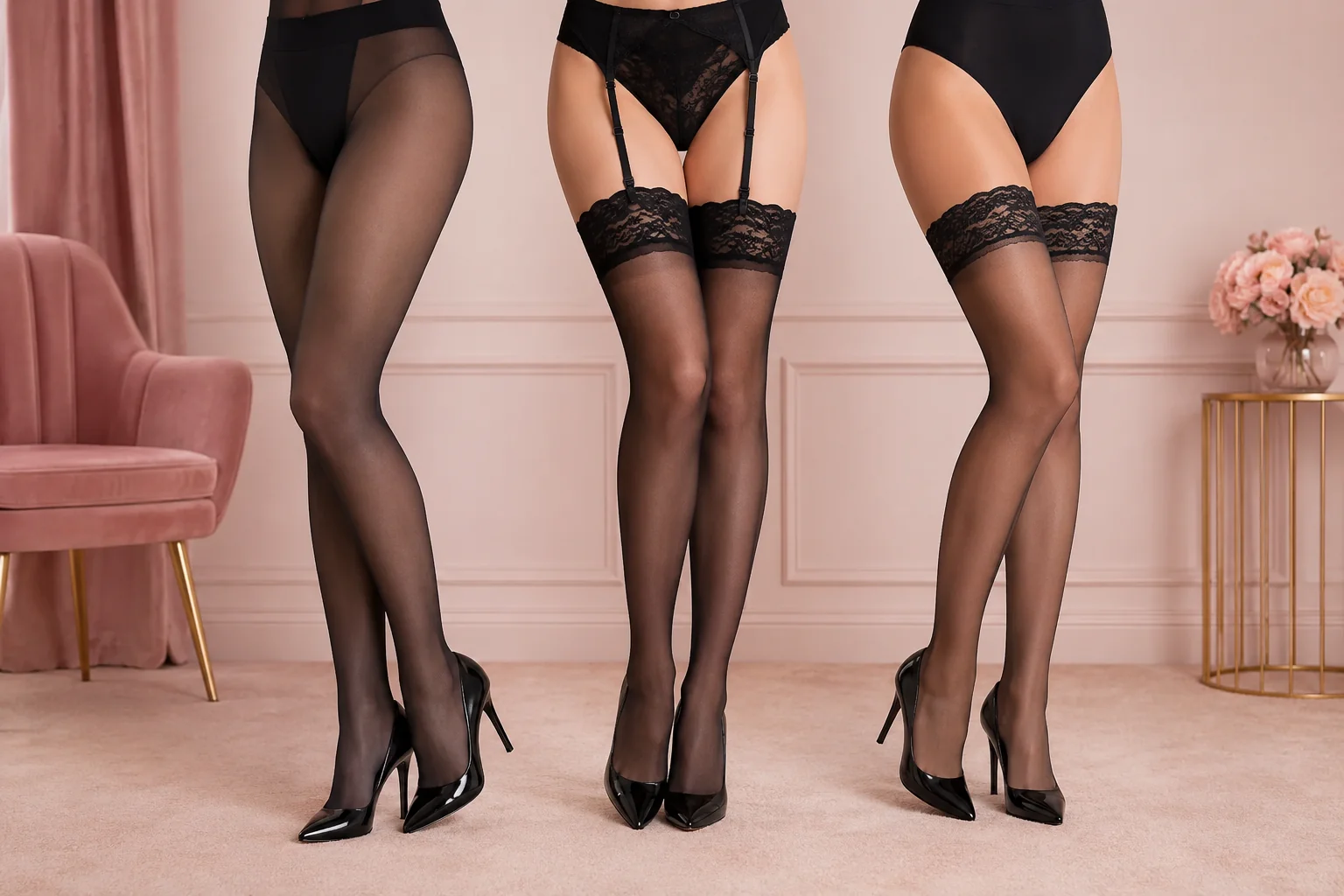
Not sure which type of hosiery is right for you? Start with the differences that actually matter when you wear them.
Understanding the difference between tights, stockings and hold-ups can make choosing hosiery much easier. This guide explains how each type is worn, how it stays in place and what to consider when choosing between comfort, practicality, confidence and a more traditional lingerie look.
- Understand the differences
- Compare how they are worn
- Choose what suits you
Translife Crossdressing Knowledge Centre
The Difference Between Tights, Stockings and Hold-Ups
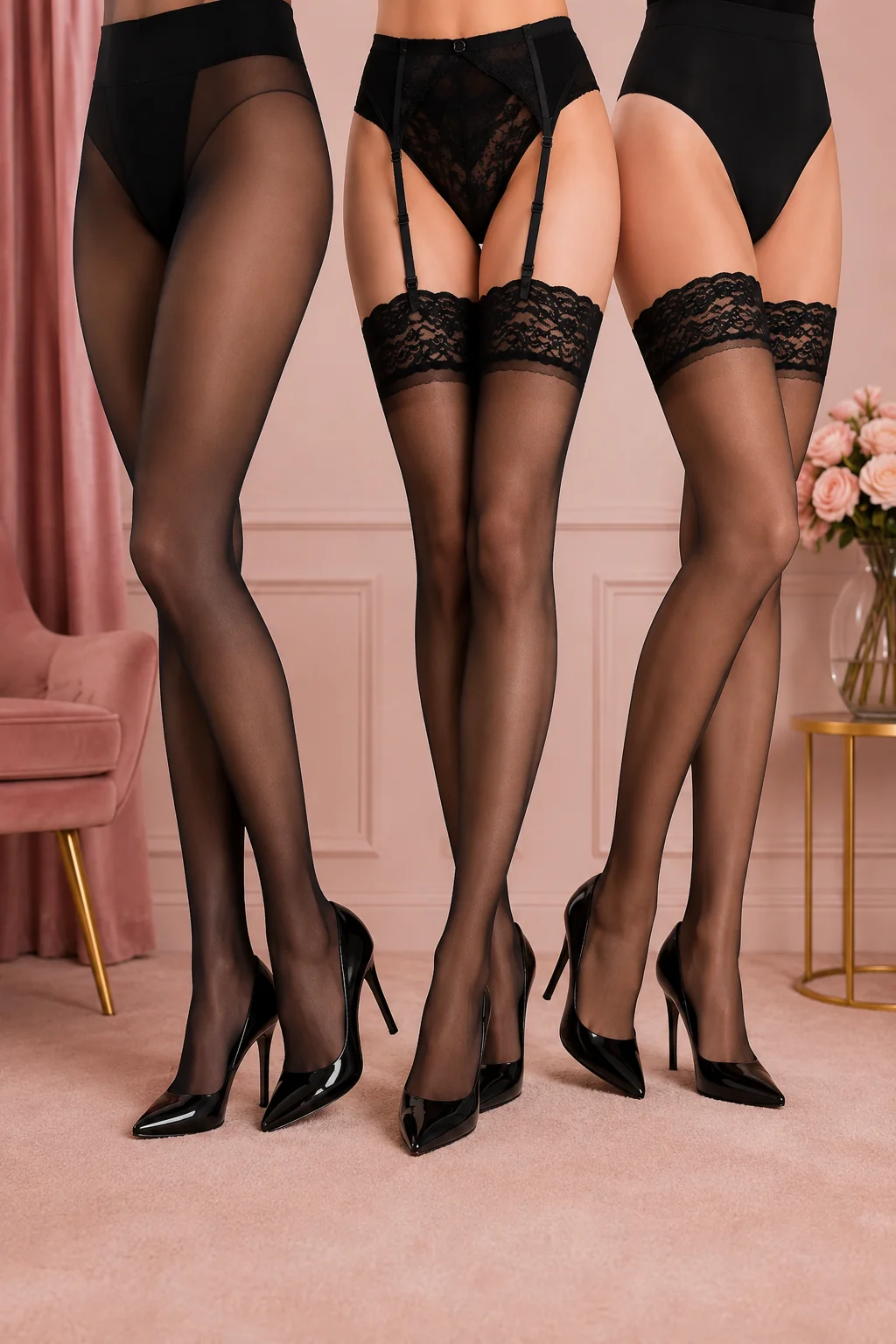
Not sure which type of hosiery is right for you? Start with the differences that actually matter when you wear them.
Understanding the difference between tights, stockings and hold-ups can make choosing hosiery much easier. This guide explains how each type is worn, how it stays in place and what to consider when choosing between comfort, practicality, confidence and a more traditional lingerie look.
- Understand the differences
- Compare how they are worn
- Choose what suits you
Tights, Stockings or Hold-Ups?
What Are Tights?
Tights are the most complete of the three hosiery styles: one garment covers the feet and legs and continues upwards over the hips to a waistband.
One Garment From Your Toes to Your Waist
When understanding the difference between tights, stockings and hold-ups, tights are usually the easiest place to start. Rather than finishing at the upper thigh, tights continue upwards to form a body section that sits around the waist.
This means the hosiery supports itself. There is no separate suspender belt to attach and no thigh band required to hold the hosiery in position. Once pulled on correctly, the waistband and stretch of the garment keep everything together.
For someone exploring feminine hosiery for the first time, that simplicity can make tights particularly approachable. They can be worn beneath dresses and skirts in much the same way as any other everyday legwear.
Four Things to Understand About Tights
They Cover the Whole Leg
Tights normally cover the feet and legs before continuing upwards over the hips.
They Finish at the Waist
A body section and waistband hold the garment in position rather than separate straps or an upper-thigh band.
They Are Self-Supporting
You do not normally need a suspender belt or another garment to keep ordinary tights in place.
Fit Matters From Toe to Waist
Because tights cover more of the body, leg length, hips, waist and overall stretch can all affect how comfortable they feel.
Why Tights Can Feel Like the Simplest Starting Point
If you have never worn feminine hosiery before, tights remove one of the first questions you might otherwise face: how do I keep them up? The waistband does that job for you.
There are no suspender clips to attach and no separate thigh band to position. That does not make tights automatically better than stockings or hold-ups, but it does make the basic process of putting them on and wearing them straightforward.
If tights sound like the right option for you, explore the current range of feminine tights available from Translife.
The hosiery continues above the legs and is held around the body by its own waistband.
This is one of the clearest practical differences between tights and traditional stockings.
Tights, Stockings or Hold-Ups?
What Are Stockings?
Traditional stockings are separate pieces of hosiery worn on each leg. They normally extend from the foot to the upper thigh rather than continuing upwards to the waist.
Hosiery That Finishes at the Upper Thigh
Stockings are one of the clearest examples of the difference between tights, stockings and hold-ups. Unlike tights, there is no body section joining the two legs together and no waistband around the waist.
Each stocking is worn separately and normally reaches to the upper thigh. Traditional stockings are designed to be supported by another garment, most commonly a suspender belt fitted with straps and clips that attach to the stocking tops.
This creates a very different wearing experience from tights. Rather than one continuous garment from toe to waist, the legs remain separate and the support comes from the lingerie worn above them.
Four Things to Understand About Stockings
Each Leg Is Separate
Stockings are worn individually rather than being joined together by a body section.
They Finish at the Thigh
The upper edge normally sits on the upper thigh instead of continuing to a waistband.
They Usually Need Support
Traditional stockings are normally attached to suspender straps to keep them securely in position.
They Create a Different Experience
Because the legs remain separate, stockings can feel and look quite different from waist-high tights.
Stockings Are Not Simply Tights That Stop Higher Up the Leg
The important difference is the way the hosiery is supported. Tights contain their own waist section, while traditional stockings form part of a two-piece system: the stockings cover the legs and the suspender belt provides the support.
Both legs and the body section form one garment, with the waistband helping to keep the hosiery in place.
The stockings remain separate and are normally held up by clips attached to a suspender belt.
Stockings Can Be About More Than Simply Covering Your Legs
For some wearers, stockings are particularly appealing because they create a more traditional lingerie experience. Wearing separate stockings with a suspender belt can feel deliberately feminine and can form part of the enjoyment of dressing rather than simply being a practical way of covering the legs.
That does mean they involve an extra step compared with tights. The stockings need to be positioned correctly and the suspender straps attached securely. For some people that is part of the appeal; for others, a simpler hosiery option may be preferable.
If stockings appeal to you, explore the current Translife range of stockings and find a style that suits the look and wearing experience you want.
Both finish at the upper thigh, but hold-ups are designed with an integral band that helps them stay in place without a suspender belt. We explain that difference in the next section.
Tights, Stockings or Hold-Ups?
What Are Hold-Ups?
Hold-ups are separate thigh-high pieces of hosiery designed to stay in place without a suspender belt, giving you much of the appearance of stockings with a simpler way of wearing them.
Thigh-High Hosiery That Supports Itself
Hold-ups help complete the basic difference between tights, stockings and hold-ups. Like traditional stockings, they are worn separately on each leg and normally finish at the upper thigh rather than continuing to the waist.
The key difference is at the top. Hold-ups are designed with an integral upper band that helps grip the thigh and keep the hosiery in position. This means they do not normally require the separate suspender belt used with traditional stockings.
For someone who likes the appearance of thigh-high hosiery but does not want to use suspenders, that combination can make hold-ups an appealing middle ground between tights and traditional stockings.
Four Things to Understand About Hold-Ups
Each Leg Is Separate
Like stockings, hold-ups are worn individually rather than being joined by a body section.
They Finish at the Thigh
The upper band normally sits on the upper thigh instead of continuing upwards to the waist.
They Support Themselves
The integrated upper band is designed to help keep the hosiery in position without suspender straps.
Thigh Fit Matters
Because the top band provides the support, a comfortable and secure fit around the upper thigh is particularly important.
Stockings and Hold-Ups May Look Similar, But They Stay Up Differently
Both styles leave the upper leg separate from the waist, so from beneath a dress or skirt they may create a similar overall effect. The practical distinction is the support system used to keep them in place.
A separate suspender belt normally provides the support, with straps attaching to the tops of the stockings.
An integral upper band is designed to grip the thigh, so no separate suspender belt is normally needed.
Hold-Ups Can Offer a Useful Middle Ground
Perhaps you like the idea of hosiery that finishes at the thigh, but the thought of fitting and attaching a suspender belt feels like an unnecessary extra step. Hold-ups are designed to provide that thigh-high look in a more self-contained form.
They can therefore appeal to someone who wants something visually closer to stockings while keeping the process of dressing relatively simple. As with every hosiery style, though, whether they feel right for you is a matter of fit, comfort and personal preference.
If thigh-high hosiery sounds right for you, explore the Translife Stockings section, where our current hold-up styles are also available.
A band that feels uncomfortable or does not remain where intended is a sign to review the product's sizing and fit guidance rather than simply accepting the problem.
Tights, Stockings or Hold-Ups?
How Does Each Type of Hosiery Stay in Place?
One of the biggest practical differences between tights, stockings and hold-ups is the way each style is supported. Understanding that difference makes the three options much easier to compare.
The Support System Changes With the Hosiery
All three styles need to remain securely in position while you are standing, sitting and walking, but they achieve that in different ways.
Tights use a waistband and body section. Traditional stockings normally rely on suspender straps attached from above. Hold-ups use their own upper-thigh band to help keep each leg in position.
None of these systems is automatically better than the others. The important question is which feels most practical, comfortable and enjoyable for the way you want to dress.
Three Hosiery Styles, Three Ways of Staying Up
Supported at the Waist
Tights continue above the legs into a body section with a waistband. The garment's stretch and waistband help hold the hosiery securely around the body.
Supported by Suspender Straps
Traditional stockings stop at the upper thigh and normally rely on straps from a suspender belt to keep each stocking in the correct position.
Supported at the Upper Thigh
Hold-ups also finish at the thigh, but their integrated top band is designed to grip the leg and keep the hosiery in place without suspender straps.
Where Does the Support Come From?
Think About How Much Involvement You Want
If your priority is simplicity, tights are usually the most self-contained option because everything forms one garment. If you like the idea of traditional lingerie and actively want to wear suspenders, stockings can make the support system part of the experience.
Hold-ups sit between those two ideas. They give you separate thigh-high hosiery without requiring suspenders, although the upper-thigh band then becomes an important part of the fit.
If the Hosiery Keeps Moving, Check the Support Point
Recheck the overall fit, usable length and waistband rather than repeatedly pulling them higher.
Check that the suspender straps are attached securely and that the stockings reach a suitable position on the thigh.
Review the upper-thigh fit and the manufacturer's product guidance because the top band is responsible for the support.
Tights, Stockings or Hold-Ups?
Do Stockings Need a Suspender Belt?
If you are looking at traditional stockings for the first time, this is one of the most important practical questions to answer before you buy them.
Traditional Stockings Normally Need External Support
Yes. Traditional stockings are normally designed to be worn with a suspender belt or another suitable suspender garment. The stocking itself usually does not contain the gripping system used by a hold-up.
A suspender belt sits around the waist or hips and has straps that extend downwards. Clips at the ends of those straps attach to the stocking tops and provide the support that keeps the stockings raised on the legs.
This support system is one of the clearest practical points to understand when considering the difference between tights, stockings and hold-ups.
Stockings and Suspenders Work Together
The Stocking Covers the Leg
Each stocking is pulled up the leg until the top reaches a comfortable position on the upper thigh.
Suspender Straps Reach Down
Straps from the suspender belt extend towards the stocking tops and are adjusted to an appropriate length.
The Clips Provide the Support
The straps attach to the stocking tops so the belt can help hold each stocking in its intended position.
Stockings and Hold-Ups Are Bought With Different Support in Mind
Because both styles finish at the thigh, they can look similar when you first see them. The important difference is whether the hosiery is designed to be supported from a suspender belt or to stay in place using its own upper band.
The stocking top provides an attachment point while the suspender belt supplies the support from above.
The upper-thigh band is designed to provide the support, allowing each hold-up to be worn independently.
A Suspender Belt Is Both Practical and Part of the Experience
If you choose traditional stockings, wearing suspenders is not simply an optional styling detail. The suspender system performs the practical job of supporting the stockings.
For some people, that is exactly what makes stockings appealing. Putting on a suspender belt, positioning the stockings and fastening the clips can create a distinctly traditional lingerie experience and make the process of dressing feel more deliberate.
For others, the extra garment and attachments may feel less convenient than tights or hold-ups. Neither preference is wrong; it is simply part of deciding what type of hosiery suits you.
Do Not Worry If Suspenders Feel Unfamiliar at First
Attaching suspender clips can feel unfamiliar the first few times. It normally becomes easier once you understand where you prefer the stockings and straps to sit.
The purpose is to support the stockings comfortably, not to pull them upwards as tightly as possible.
Standing and moving briefly before putting on your outer clothing can help you identify anything that needs a small adjustment.
If traditional stockings appeal to you, our Expert Guide to Suspender Belts for a Flawless Look provides more detailed help with choosing, fitting and wearing a suspender belt.
Tights, Stockings or Hold-Ups?
Which Is More Comfortable and Practical?
Once you understand how tights, stockings and hold-ups are worn, the next question is how each option actually feels during a real day or evening of dressing.
Comfort Is Personal — Practicality Depends on What You Are Doing
There is no single winner in the difference between tights, stockings and hold-ups. A style that feels wonderfully comfortable to one person may be less appealing to another, particularly because each type places its support in a different area of the body.
Tights place their support around the waist and hips. Traditional stockings use a separate suspender system. Hold-ups concentrate their support around the upper thigh. Those differences affect more than appearance — they can change how the hosiery feels when you sit, walk and move.
Your outfit, how long you intend to remain dressed and how much adjustment you are comfortable with can therefore be just as important as the style you prefer visually.
How the Three Options Differ in Everyday Wear
Think Beyond How They Look in the Mirror
Hosiery can feel quite different once you have been dressed for a while. These are useful practical considerations rather than fixed rules about which style you should choose.
Tights are generally the most self-contained. Hold-ups add the need to position each leg carefully, while traditional stockings also involve fitting and attaching suspenders.
Tights include a body section and waistband. Stockings and hold-ups leave the area above the thighs free of the hosiery itself, although stockings normally add a suspender belt.
With hold-ups, the upper band is responsible for support. It therefore needs to remain both comfortable and secure while you move.
Whatever you choose should feel secure enough that you are not constantly thinking about it. Repeated slipping, pulling or discomfort usually means the fit needs attention.
Your Plans Can Change What Feels Most Practical
Dressing at Home
With fewer practical pressures, you may simply choose the style that gives you the feminine experience or appearance you most enjoy.
Going Out
Security and confidence can become more important when walking, sitting, travelling or spending several hours away from home.
A Longer Day or Evening
What feels fine for a few minutes may feel different after several hours, so comfort at the waist, thigh or suspender points becomes increasingly important.
Choose Hosiery You Can Wear Without Constantly Worrying About It
When you are developing confidence in feminine clothing, something as simple as wondering whether your hosiery is slipping can become an unnecessary distraction. The most useful choice is often the one that allows you to stop thinking about the hosiery and enjoy being dressed.
That may mean the security of tights, the traditional feel of properly supported stockings or the freedom of well-fitting hold-ups. Your answer may also change as you gain experience.
There is no reason you have to choose one style permanently. Different hosiery can suit different outfits, occasions and moods.
Do not judge tights, stockings or hold-ups solely from one badly fitting pair. Correct sizing and suitable proportions matter whichever style you choose.
Tights, Stockings or Hold-Ups?
The Look & Feminine Experience
Choosing hosiery is not always just a practical decision. Tights, stockings and hold-ups can create different feelings when you dress, even when the finished appearance beneath an outfit may be quite similar.
How Hosiery Makes You Feel Can Matter as Much as How It Looks
For many crossdressers, feminine clothing is about much more than simply reproducing the appearance of a particular outfit. The process of getting dressed, the feel of different garments and the confidence they create can all be part of the experience.
That is why the difference between tights, stockings and hold-ups is not purely technical. Tights can feel simple and complete, traditional stockings can introduce a distinctly lingerie-led element, while hold-ups can provide a thigh-high look without adding a suspender belt.
None of those experiences is more feminine than another. The important question is which one makes you feel comfortable, confident and most like the version of yourself you want to see.
What Each Hosiery Style Can Bring to Your Outfit
A Smooth, Complete Feeling
Because tights form one continuous garment from the feet to the waist, they can create a very complete feeling when you get dressed.
They work naturally with a wide range of skirts and dresses and can feel familiar, understated and easy to incorporate into an everyday feminine outfit.
A More Traditional Lingerie Experience
Stockings can make the act of dressing feel more deliberate because they are normally worn together with a suspender belt.
For someone who enjoys traditional feminine lingerie, the combination of stockings, suspenders and other coordinating pieces can become an important part of the overall experience.
A Thigh-High Look With Less Equipment
Hold-ups can provide much of the visual appeal associated with thigh-high hosiery while avoiding the need for separate suspender straps.
They can therefore suit someone who enjoys the feeling of separate legwear but wants a simpler and more self-contained dressing experience.
Think About Both the Finished Look and the Dressing Experience
Hosiery is often partly concealed beneath your clothing, so the style that feels most special to wear may not necessarily be obvious to somebody looking at the finished outfit.
Think about the overall silhouette and whether you want hosiery to feel like a subtle part of the outfit or a more deliberate part of your styling.
The feel of tights around the waist, suspender straps with stockings or the upper band of hold-ups can each create a different personal experience.
Different Outfits Can Invite Different Choices
An Everyday Feminine Outfit
Tights can feel natural with everyday skirts and dresses when you want the hosiery to simply become part of the finished outfit.
A Lingerie-Led Look
Traditional stockings may feel particularly appropriate when coordinating lingerie and enjoying the dressing process are central to the experience.
A Thigh-High Look Without Suspenders
Hold-ups can provide an appealing alternative when you want separate thigh-high hosiery without making a suspender belt part of the outfit.
You Do Not Have to Dress According to Someone Else's Idea of Feminine
It is easy when starting out to wonder whether there is a correct type of hosiery you should be wearing. There is not. Someone may feel wonderfully feminine in simple everyday tights, while another person may especially enjoy the ritual of stockings and suspenders.
Your preference may also change depending on your mood, outfit and plans. A practical pair of tights might be exactly what you want for one occasion, while stockings or hold-ups may make another outfit feel more special.
Exploring those differences is part of discovering your own feminine style rather than following a fixed rule.
Trying tights, stockings and hold-ups at different times is often the easiest way to discover what genuinely suits you. Your favourite may depend on the outfit, occasion or simply how you want to feel that day.
Tights, Stockings or Hold-Ups?
Which Hosiery Is Easiest for a Beginner?
If this is your first time buying or wearing feminine hosiery, you probably want something that feels straightforward, secure and easy to understand.
For Most Beginners, Tights Are the Simplest Starting Point
Tights are often the easiest introduction because the legs, body section and waistband form one garment. There is no suspender belt to fit and no separate thigh band responsible for keeping each leg in place.
That does not mean every beginner should choose tights. Someone who has always wanted to experience stockings and suspenders may enjoy beginning there, while another person may prefer the thigh-high appearance of hold-ups.
The important point is that “easiest” and “best” are not necessarily the same thing. Your first choice should help you feel comfortable and confident rather than make dressing feel unnecessarily complicated.
How Easy Is Each Type to Get Started With?
The Most Straightforward Starting Point
Pull them on carefully, position the legs and bring the waistband into place. Everything you need is contained within one garment.
Once the fit is right, there are relatively few separate components to think about while you are dressed.
Simple in Principle, More Dependent on Fit
Hold-ups do not need suspenders, so there are fewer pieces to manage than with traditional stockings.
The main learning point is positioning the upper bands comfortably and making sure they feel secure on your thighs.
A Little More to Learn
Traditional stockings normally introduce another garment: the suspender belt. You also need to position the stockings, attach the clips and adjust the straps.
None of this is especially difficult once familiar, but it does create more steps for someone learning from scratch.
They Let You Concentrate on the Rest of Your Outfit
When you are learning feminine dressing, you may already be thinking about a skirt or dress, underwear, shoes, makeup, wig, accessories and how everything feels together.
Starting with hosiery that is relatively self-contained can reduce the number of unfamiliar things you are trying to manage at the same time.
This is why tights can be such a practical first choice: once they are fitted comfortably, you can largely move on and concentrate on the rest of your look.
Four Things Matter More Than Choosing the “Perfect” Hosiery
Comfortable Fit
Your hosiery should feel secure without excessive pulling, digging in or constant adjustment.
Easy Movement
Make sure you can sit, stand and walk naturally once the hosiery is in position.
Confidence
Choose something that lets you enjoy being dressed rather than worrying constantly about what your hosiery is doing.
Curiosity
Your first choice does not have to become your permanent choice. You can explore the other styles later.
When Another Style May Be the Better First Choice
A beginner recommendation should help you, not restrict you. If another hosiery style is the reason you became interested in feminine hosiery in the first place, there is no requirement to start with tights simply because they are usually easier.
Their self-supporting design can make them an approachable alternative if the look and feel appeal to you more than waist-high tights.
There is nothing wrong with learning the extra steps from the beginning if traditional lingerie is what excites you about exploring hosiery.
You Are Learning What Works for You
Your first pair of feminine hosiery does not need to prove anything. It is simply an opportunity to discover how hosiery feels, how it changes your outfit and which practical details matter to you personally.
If tights feel right, continue with them. If you become curious about hold-ups, try them. If stockings and suspenders appeal to you, learn how they work.
Experience makes all three options easier, so there is no reason to feel that you need to master everything on your first attempt.
Tights, Stockings or Hold-Ups?
Which Hosiery Is Right for Me?
You now know the practical difference between tights, stockings and hold-ups. The final choice becomes much easier when you stop asking which type is “best” and start asking which one best suits you.
Start With What Matters Most to You
Your ideal hosiery depends on more than appearance. Think about how easy you want it to be to get dressed, where you prefer the hosiery to be supported, whether you want to wear suspenders and the type of feminine experience you enjoy.
Tights, stockings and hold-ups can all be good choices. They simply solve the same basic problem in different ways. Tights support themselves from the waist, traditional stockings normally use suspenders, and hold-ups support themselves at the thigh.
You may also find that you do not have one permanent answer. Different outfits, occasions and moods can make different hosiery styles feel right at different times.
What Is Your Main Priority?
Keep Everything in One Garment
If you want hosiery that covers the legs continuously to the waist without needing a separate suspender belt or thigh support band, tights are the natural starting point.
Make Suspenders Part of the Experience
If putting on a suspender belt and traditional stockings appeals to you, the extra steps may be part of the pleasure rather than an inconvenience.
Skip the Waistband and Suspenders
If you like separate thigh-high hosiery but do not want to wear a suspender belt, hold-ups provide the most direct alternative.
Ask Yourself These Four Questions
There is no score to calculate. Your answers simply help identify which differences matter most to you.
If yes, tights are the obvious option. If you prefer your hosiery to finish at the thigh, compare stockings and hold-ups instead.
If yes, traditional stockings may be exactly what you want. If no, tights or hold-ups remove that requirement.
Tights are usually the most self-contained option. Hold-ups can also be straightforward when the thigh fit works well.
Everyday simplicity, traditional lingerie or self-supporting thigh-high hosiery are all perfectly valid preferences.
Tights vs Stockings vs Hold-Ups at a Glance
Which Description Sounds Most Like You?
You Want the Most Self-Contained Option
- You prefer hosiery that reaches the waist.
- You do not want to use a suspender belt.
- You value simplicity and easy coordination.
- You want a practical starting point as a beginner.
Traditional Lingerie Appeals to You
- You specifically want separate thigh-high stockings.
- You like the idea of wearing a suspender belt.
- You enjoy a more deliberate dressing process.
- The lingerie experience matters as much as convenience.
You Want Thigh-High Hosiery Without Suspenders
- You prefer hosiery that finishes at the thigh.
- You do not want a waistband around your body.
- You do not want to wear a suspender belt.
- A secure upper-thigh band feels comfortable for you.
Your Outfit and Occasion Can Change the Answer
You may prefer tights with an everyday skirt or dress, stockings when you want traditional lingerie to become part of the experience, and hold-ups when you want thigh-high hosiery without the additional suspender equipment.
Going out may make security and practicality more important. Dressing at home may give you more freedom to experiment. A longer day or evening may make comfort the deciding factor.
This is why choosing hosiery does not have to result in one permanent winner. The right choice can depend on what you are wearing and what you plan to do.
Tights, stockings and hold-ups are simply different ways of wearing feminine hosiery. What matters is that your choice feels comfortable, supports your confidence and helps you enjoy the way you are dressed.
Tights, Stockings or Hold-Ups?
Tights, Stockings & Hold-Ups FAQ
These are some of the practical questions that often come up when comparing tights, traditional stockings and hold-ups for the first time.
The Small Details Can Make the Final Choice Much Easier
By this point, you should understand the main difference between tights, stockings and hold-ups. Tights continue to the waist, traditional stockings finish at the thigh and normally use suspenders, while hold-ups finish at the thigh and are designed to support themselves.
The questions below bring together some of the remaining practical points that can help you decide what to try first and what to expect when you wear each style.
Common Questions About Tights, Stockings and Hold-Ups
What is the main difference between tights, stockings and hold-ups?
Tights are one garment that normally extends from the feet to the waist. Traditional stockings are separate thigh-high garments that usually need a suspender belt for support. Hold-ups are also separate thigh-high garments, but they are designed to stay in place using their own upper band.
Do stockings need a suspender belt?
Traditional stockings normally do. A suspender belt or another compatible suspender garment provides the support that keeps the stockings positioned on the legs. Hold-ups are different because they are designed to support themselves.
Are hold-ups the same as stockings?
No. Both finish around the upper thigh, which can make them look similar, but the support system is different. Traditional stockings normally rely on suspenders, while hold-ups have an integrated upper band designed to help keep them in place.
Which is easiest to wear for a beginner?
Tights are usually the simplest starting point because they are self-contained and do not need a separate support system. Hold-ups can also be straightforward when the thigh fit is right. Traditional stockings involve a few more steps because of the suspender belt.
Are stockings more feminine than tights?
No hosiery style is inherently more feminine than another. Stockings may create a more traditional lingerie experience, while tights can feel elegant, polished and completely natural as part of an everyday feminine outfit. What makes you feel confident matters far more than the category of hosiery.
Are hold-ups more comfortable than tights?
They can be for some people, particularly if they prefer not to have a tights waistband or body section. Others prefer the continuous support of tights. With hold-ups, comfort depends greatly on how the upper-thigh band fits.
Can I wear stockings without suspenders?
If they are true traditional stockings, they normally require compatible external support. If the product is described as hold-ups or stay-ups, it is intended to remain in place without a separate suspender belt.
Which type is best for going out?
The best choice is whichever feels secure and comfortable while you walk, sit and move. Tights can be very practical, stockings can work well when the suspender system is fitted comfortably, and hold-ups can be convenient when their thigh bands stay securely in position.
Can I wear different hosiery styles with different outfits?
Absolutely. You might prefer tights with an everyday dress, stockings when traditional lingerie is part of the experience, and hold-ups when you want thigh-high hosiery without suspenders. There is no need to commit to only one style.
What should I do if my hosiery keeps slipping down?
Repeated slipping usually suggests that the fit or support system needs attention. With tights, review overall fit and usable length. With stockings, check the suspender support. With hold-ups, review the upper-thigh fit and the manufacturer's fitting guidance.
Should I buy tights, stockings or hold-ups first?
If you simply want the easiest introduction, tights are usually a sensible first choice. If thigh-high hosiery appeals to you, hold-ups avoid the need for suspenders. If the traditional stocking-and-suspender experience is specifically what interests you, there is no reason you cannot start there.
Which hosiery is best for crossdressers?
There is no single hosiery style that is best for every crossdresser. The right choice depends on your proportions, comfort, outfit, confidence and the experience you want from dressing. Many people eventually keep more than one type so they can choose according to the occasion.
Keep Your First Choice Simple
If none of the three styles has clearly stood out to you, starting with a well-fitting pair of tights is a sensible approach. They allow you to experience feminine hosiery without introducing a separate suspender system or relying on an upper-thigh support band.
Once you know how hosiery feels and what matters to you, trying stockings or hold-ups becomes much easier because you have something familiar to compare them with.
Tights provide a complete waist-high garment, traditional stockings use external suspender support, and hold-ups provide a self-supporting thigh-high alternative. Your best choice is the one that suits your body, outfit, comfort and the experience you want from dressing.
Now you know the differences, browse the Translife hosiery range and explore the styles that best suit your preferences, outfit and the way you want to dress.