Beard Shadow Coverage Guide
How to neutralise visible beard shadow before foundation, build controlled coverage and create a smoother feminine complexion without simply piling on more makeup.
Beard Shadow Is a Colour Problem as Well as a Coverage Problem
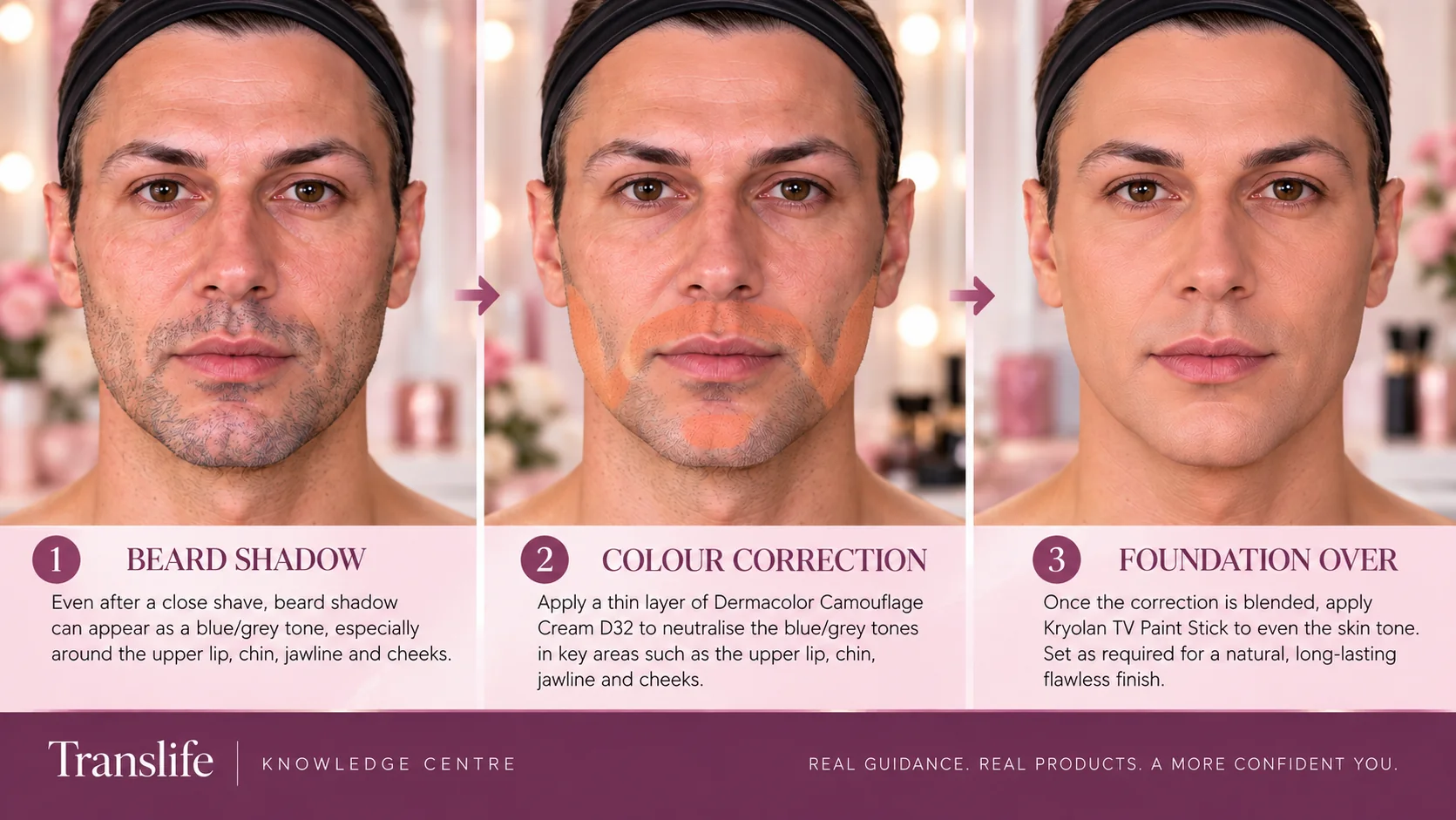
A close shave removes hair above the skin, but darker facial hair beneath the surface can still create a blue, grey or cool-toned shadow. That is why foundation alone may not completely disguise it.
The key is colour correction. Instead of trying to bury beard shadow beneath increasingly heavy foundation, a carefully chosen warm-toned corrector is applied to the areas that need it. Foundation can then do its proper job: evening the complexion.
Sophie commonly uses Dermacolor Camouflage Cream D32 for this stage. It is highly pigmented, so the technique is about controlled placement and blending rather than covering the whole face with a thick orange layer.
Start With the Closest Comfortable Shave
Prepare your skin
Begin with clean skin and the shaving method that works reliably for you. The goal is to reduce visible and tactile hair without leaving the skin excessively irritated before makeup is applied.
Do not chase perfection
Repeatedly shaving the same area can leave redness, soreness and texture that then becomes another problem to cover. A comfortable close shave is a better makeup base than damaged skin.
Allow your skin to settle where necessary before beginning colour correction. Beard coverage is easier when the surface is comfortable and calm.
Identify Where the Shadow Actually Is
Beard shadow is rarely identical across the entire face. It is often most obvious around the upper lip, corners of the mouth, chin and jawline, with some people also seeing it across the lower cheeks or neck.
Look at your face in good, neutral light before applying correction. You are looking for the cool-toned areas that remain after shaving—not simply following an imaginary beard-shaped mask.
Apply Colour Correction Where It Is Needed
The warm tone of a corrector helps counteract the cooler blue-grey appearance of beard shadow. Sophie uses Dermacolor Camouflage Cream D32 as her established beard-cover reference.
Start with a small amount. Work it into the visible shadow and blend the edges so there is not a hard boundary between corrected and uncorrected skin. You are not trying to create the finished skin colour at this stage—the foundation comes next.
Foundation Goes Over the Correction
Once the correction has been blended, foundation is used to bring the complexion back to an even, natural-looking skin tone. Sophie uses Kryolan TV Paint Stick when dependable full coverage is required.
Apply foundation over the corrected areas without aggressively rubbing away the work underneath. Build and blend the complexion until the correction is concealed and the beard shadow is no longer visually dominant.
Correction
Deals primarily with the unwanted beard-shadow colour.
Foundation
Creates the finished complexion and coverage over the corrected skin.
Build Coverage Rather Than Creating One Heavy Layer
Strong beard shadow can tempt beginners to use a large amount of both corrector and foundation. That can hide colour but create an obviously heavy surface, particularly around the mouth where the face moves constantly.
A more controlled approach is to apply enough corrector to neutralise the cool tone, then build foundation gradually. Check the result in normal lighting between layers rather than judging only from very close to the mirror.
Common Beard-Cover Problems
The beard shadow still looks grey
The correction may be too light, too thin in the strongest areas, or may have been moved during foundation application. Reassess the colour rather than immediately adding a thick layer of foundation.
The face looks orange
Too much corrector may be visible beyond the beard-shadow area or insufficiently covered by foundation. Correction should neutralise the shadow, not become the dominant complexion colour.
The makeup looks cakey
Too much product, irritated or dry skin, or repeatedly adding layers can emphasise texture. More coverage does not always create a smoother result.
The upper lip breaks through first
The mouth moves constantly and this area can carry strong shadow. Pay particular attention to controlled correction, blending and the amount of foundation used around the upper lip.
The jaw looks different from the face
Beard growth often continues along the jaw and sometimes onto the neck. Check the transition carefully in normal light so the complexion does not stop abruptly.
I can still see skin texture
Makeup changes colour and appearance but does not physically remove pores, hair follicles or natural skin texture. Aim for a convincing overall complexion rather than an impossible airbrushed surface.
Darker or Stronger Beard Growth May Need More Careful Correction
Beard density, hair colour and skin tone vary enormously. Someone with light facial hair may need very little correction, while dense dark growth can remain clearly visible even after an excellent shave.
The answer is not automatically to use more D32 everywhere. Look at the actual colour you are trying to neutralise and concentrate coverage where the shadow is strongest. Your own combination of skin tone and beard colour determines how much correction is useful.
If the finished result looks heavy, reconsider the balance between correction and foundation rather than assuming the only solution is another layer.
Beard Cover Should Disappear Into the Makeup
When I cover beard shadow, I do not want the client to look as though they are wearing beard cover. The correction is simply one stage underneath the finished makeup.
D32 has been an extremely useful product for me because I can place it where the beard shadow needs neutralising and then build the complexion over it. I would much rather use the correction for the job it is designed to do than try to hide everything beneath an unnecessarily thick foundation.
The most important lesson is to keep looking at the face in front of you. Beard growth differs from person to person, so the amount and placement of correction should differ too.
Two Products, Two Different Jobs
Dermacolor Camouflage Cream
D32 is Sophie’s established beard-shadow correction reference. Its job here is targeted colour neutralisation before foundation.
View Dermacolor Camouflage CreamKryolan TV Paint Stick
A full-coverage foundation used over the corrected complexion to create an even finished skin tone.
View Kryolan TV Paint StickWatch Sophie Demonstrate Beard Cover
Beard Cover Video
Crossdressing LifestyleSee Sophie demonstrate beard-cover technique so you can compare the written explanation with a real application.
Watch Sophie’s Beard Cover VideoExplore More Makeup Help
Continue with Sophie’s makeup videos or browse the wider Translife Resource Hub for practical guidance and support.
Continue Your Makeup Journey
Beard-shadow correction is only one part of the finished complexion. The next specialist guide in the Translife makeup series will look at Foundation & Concealer in detail, while the Beginner’s Makeup Guide provides the complete overview from preparation through to the finished look.
Beard Shadow Coverage FAQs
Why can I still see beard shadow after a very close shave?
Shaving removes hair above the skin, but darker hair beneath the surface can still create a cool blue-grey appearance. That underlying colour is why correction can be useful even when the face feels closely shaved.
Why not just use more foundation?
Foundation can add coverage, but it may not neutralise the cool colour effectively. Using correction for the colour and foundation for the complexion separates the two jobs and can avoid unnecessary heaviness.
Do I apply D32 over my whole beard area?
Not automatically. Look for the areas where beard shadow remains visible and concentrate correction there. The amount and placement should respond to your own beard density and skin tone.
Does beard cover need to look orange before foundation?
The correction may look warmer than your natural complexion because it is neutralising a cooler tone, but the goal is controlled correction rather than creating a thick orange mask.
Should foundation be rubbed over the corrector?
Apply and blend foundation carefully so you do not simply move or remove the correction underneath. Build the complexion progressively and assess the result as you work.
Can makeup completely remove beard texture?
No. Makeup can dramatically change colour and visual appearance, but it cannot physically remove natural pores, follicles or skin texture. A convincing complexion is a more useful goal than an airbrushed close-up effect.
Neutralise the Shadow, Then Build the Complexion
Successful beard coverage is not about applying the most makeup. Identify the cool beard shadow, correct it carefully, then let your foundation create the finished complexion.