Silicone Hip Pads Guide
How to choose, position and wear silicone hip pads for a fuller, beautifully balanced silhouette — with practical advice from Sophie.
Shape, comfort and confidence
Creating curves that work with your figure
Silicone hip pads add fullness around the hips and upper thighs, helping balance the proportions of a broader torso. The right pads can transform how a dress, skirt or fitted outfit falls — but the size, thickness and position make a real difference to the finished silhouette.
Sophie’s preference: silicone over foam
“I prefer wearing silicone hip pads to foam versions because of how they feel and how closely I can get them against my body. I find them a great way to balance out a male torso and create a curvier figure.”
For a more pronounced result, Sophie often prefers larger sizes. Compare each pad’s thickness as well as its overall dimensions to understand how much additional hip shape it will create.
Understand the options
Standard hip pads or 360° hip pads?
Standard silicone hip pads
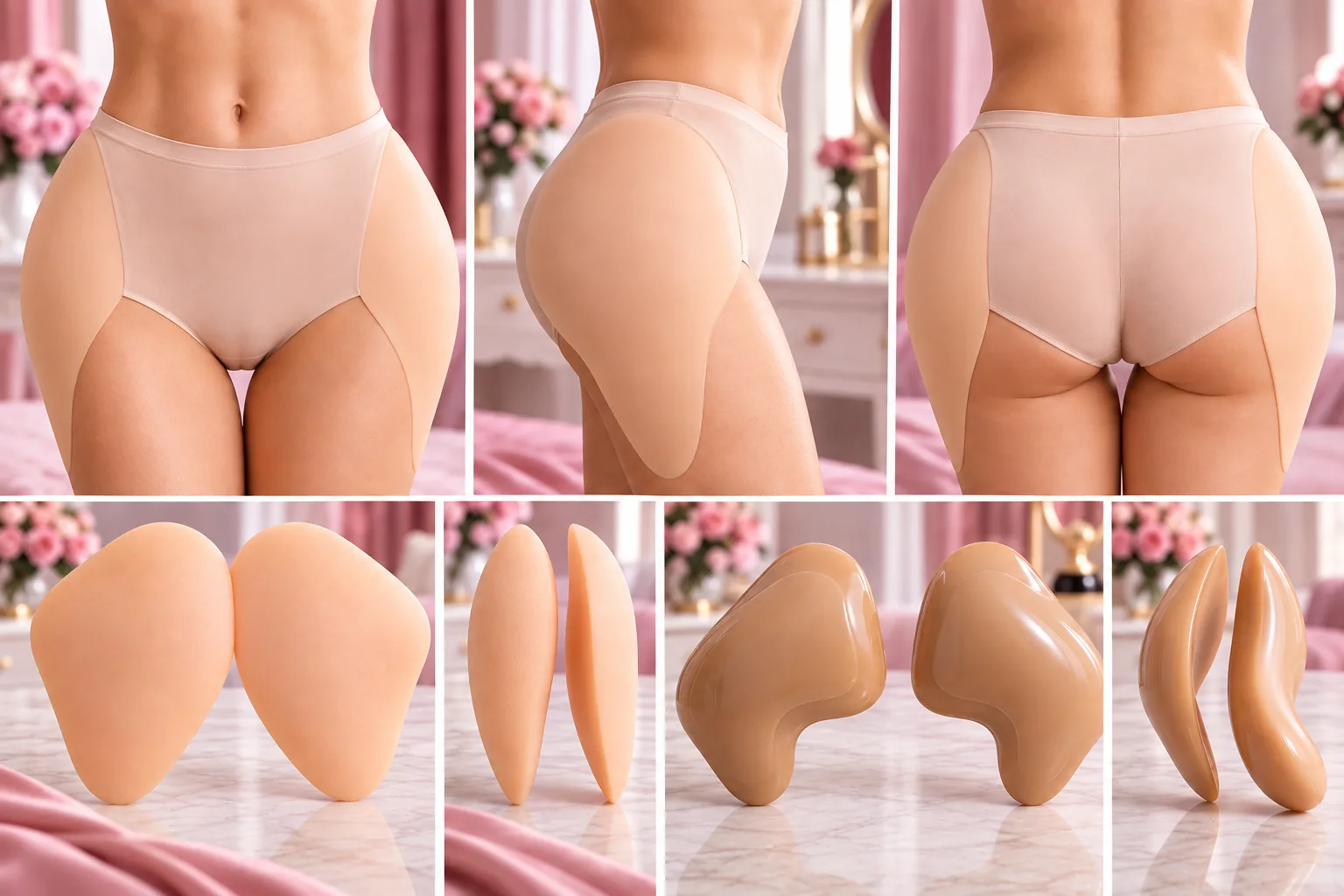
Usually supplied as a left and right pad, these are positioned at the sides of the hips and extend down towards the upper thighs. They build outward curves and may add some fullness towards the rear.
If you want more pronounced bottom projection, you may also wish to consider separate rear padding.
360° silicone hip pads
These are also separate left and right pads, but each has a wraparound shape that sweeps from the hip towards the rear. This helps create a fuller transition around the hip and bottom area.
Compare the actual product photographs and dimensions: the amount of rear coverage and projection varies between designs.
Getting the shape right
Size, thickness and positioning
Choose the amount of curve
Check the dimensions and thickness of each size before ordering. Larger and thicker pads generally add more volume, but your ideal choice depends on your torso, existing hip width and the silhouette you want.
Find your intended waistline
Sophie generally recommends starting with the top of the pads roughly level with your belly button. Adjust from there to suit your proportions and where you want your waist to appear. Both sides should sit at a matching height and extend naturally down the outer thighs.
Check the result from every angle
Try your chosen outfit and check the front, side and rear views. Move the pads slightly if the transition looks abrupt or the fullest point sits too high or too low.
Wearing your pads
Keeping your hip pads comfortably in place
Support is more dependable than tackiness
Some pads have a naturally tacky or “sticky” backing, which can help them stay in place when new. Sophie finds that this grip may diminish quite quickly with wear, so she does not rely on it alone.
Her preferred method is to wear the pads inside tights or a suitable supporting garment, helping keep both pads in position throughout the day.
Check the edges under fitted clothes
Look for thin, tapered edges, particularly if you plan to wear a close-fitting dress, skirt or trousers. A smooth supporting layer can help reduce visible outlines.
Walk, sit and move around in your outfit before going out to make sure the pads remain comfortable and secure.
Looking after your investment
Care and storage
Always follow the care instructions supplied with your particular pads, especially if they have an adhesive or tacky backing. Different silicone products and surface treatments may require different cleaning methods.
- Handle the thinner edges carefully when putting pads on and taking them off.
- Keep them away from sharp objects and rough surfaces that could tear or damage the silicone.
- Clean and dry them as directed by the manufacturer before storage.
- Store them in a clean, protected position without crushing or sharply folding the edges.
Explore the collection
Find your preferred hip shape
Browse Translife’s silicone hip pads and body-shaping collection. Compare standard and 360° designs, available sizes and product measurements to choose the look that suits you.