Translife Knowledge Centre
Wig Cap Construction & Fibres
Understand what affects the hairline, where you can part the hair and whether you can use heated styling tools.
Explore cap construction ↓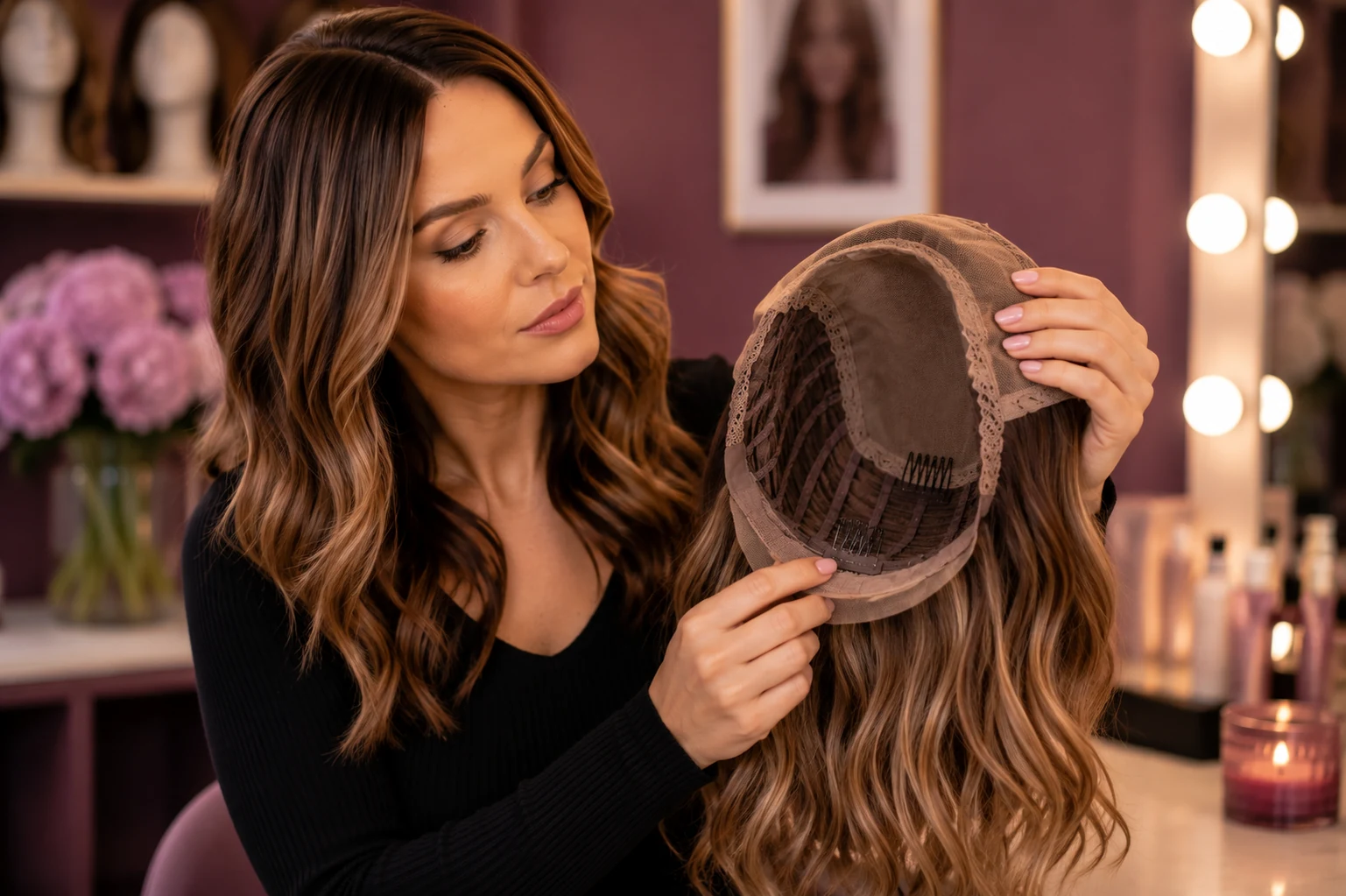
What the cap tells you about the fit and finish
Monofilament part
A fine mesh strip gives the appearance of scalp along the part. Check where the strip sits on the model, as that is the area available for a natural-looking part.
Monofilament top
The mesh covers a wider area across the top of the cap, so you can move the part within that area. A double-monofilament top adds a second layer against the scalp.
Lace front
A fine lace panel creates the appearance of hair growing along the front hairline. It is useful for styling away from the face. Look for a mono top or a wider lace area if you also want more parting flexibility.
Hand-tied cap
Individual hairs are tied into the cap material so they can move more independently. Check whether the listing says the whole cap is hand-tied or identifies a specific panel.
Wefted or open cap
Hair is sewn in rows called wefts. An open cap leaves spaces between rows for airflow. Some wigs combine a wefted back with a lace front or mono top.
If you want to sweep the hair off your face, check the front hairline. If you change where you part your hair, check how far the parting area extends.
What the fibre tells you about styling
Standard synthetic
Pre-styled fibre usually returns to its original shape after washing and air-drying. Keep conventional heated tools such as straighteners and curling irons away from standard synthetic fibre.
Heat-friendly synthetic
Can be restyled within the temperature range specified for that fibre. Heat Defiant (HD) is Jon Renau’s name for its heat-friendly synthetic fibre. Other brands can have different limits.
Human hair
Offers more flexibility for blow-drying and restyling and generally needs more routine styling. Use care products suited to human-hair wigs and check the brand’s recommendations for the piece.
How to style Jon Renau Heat Defiant fibre
- Confirm that your model is labelled Heat Defiant or heat-friendly synthetic. Work with dry fibre and gently detangle it using a wide-tooth comb.
- Use a tool with a digital temperature control. Jon Renau recommends 270–280°F (about 132–138°C) for styling its HD fibre.
- Work in small sections with a heat protectant suitable for HD fibre, following the brand’s guidance. Keep the heated tool away from the cap, lace and knots. For curls, let each section cool in shape.
350°F (about 177°C) is the stated upper tolerance for Jon Renau HD fibre. Use the recommended working range above when styling.
See how the features combine
Anne combines a lace front and hand-tied cap with Heat Defiant fibre. Elizabeth combines a lace front, monofilament and hand-tied construction with heat-friendly synthetic fibre. The cap tells you how the hairline and parting behave. The fibre tells you how to style it.
Measure for wig size · Explore wig care · Compare wig fibres