Translife · Footwear knowledge centre
Crossdressing Boots Guide: Finding Your Perfect Fit
From elegant ankle boots to striking thigh-high styles, discover how to choose feminine boots that fit your feet and your legs. Practical advice from Translife on sizing, calf measurements, shaft height and styling with confidence.
Why boot fit is different
Beautiful boots begin with the right measurements
A boot has more fitting points than a shoe. Your usual UK footwear size is a starting point, but a beautiful pair can still be too narrow across the foot, tight at the calf, short in the shaft or difficult to fasten at the thigh. The answer is to check each relevant measurement before ordering.
Step-by-step fitting advice
How to measure your feet, calves and thighs
Use a flexible tape measure while wearing the socks or hosiery you expect to wear with your boots. Measure both legs: if they differ, use the larger circumference when checking a fitted boot.
1. Foot length and width
Stand with your weight evenly distributed. Measure heel to longest toe and across the widest part of the foot. Consult the individual product size chart rather than assuming a universal conversion.
2. Calf circumference
Standing upright, wrap the tape around the widest part of each calf without pulling it tight. Compare this with the boot’s calf measurement at the same height.
3. Shaft height
Measure vertically from the floor or sole level up to the intended top of the boot, checking how high the boot reaches relative to your knee. Manufacturer measurement methods can vary.
4. Thigh and opening circumference
For over-the-knee or thigh-high boots, measure around the leg at the height of the boot opening. Check whether the upper is fixed, elasticated or adjustable.
Choosing your silhouette
Which style of feminine boot is right for you?
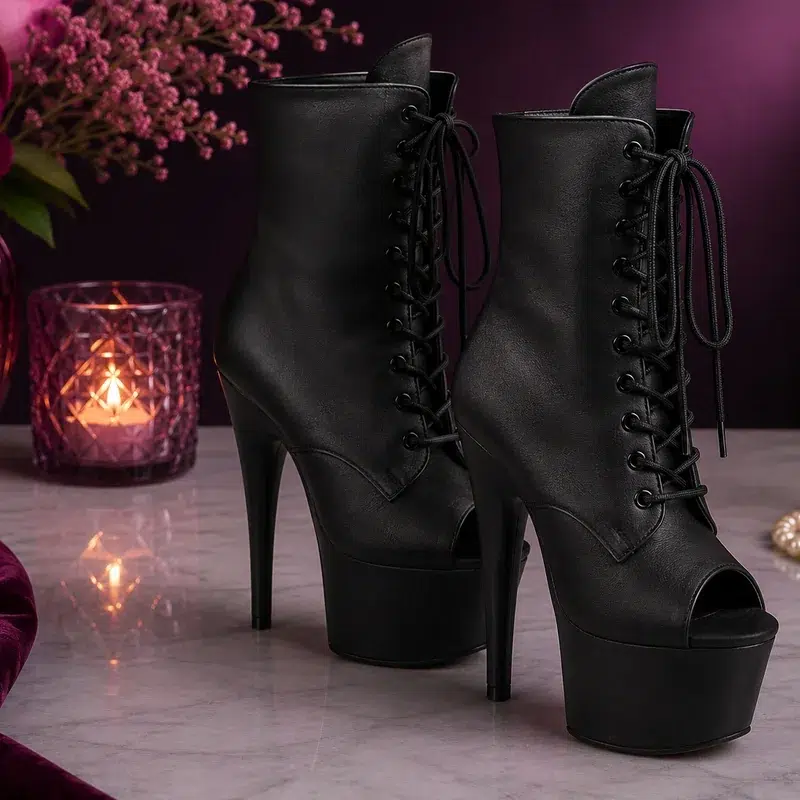
Ankle boots
A versatile first choice with less calf fitting to worry about. Easy to pair with jeans, skirts and dresses.
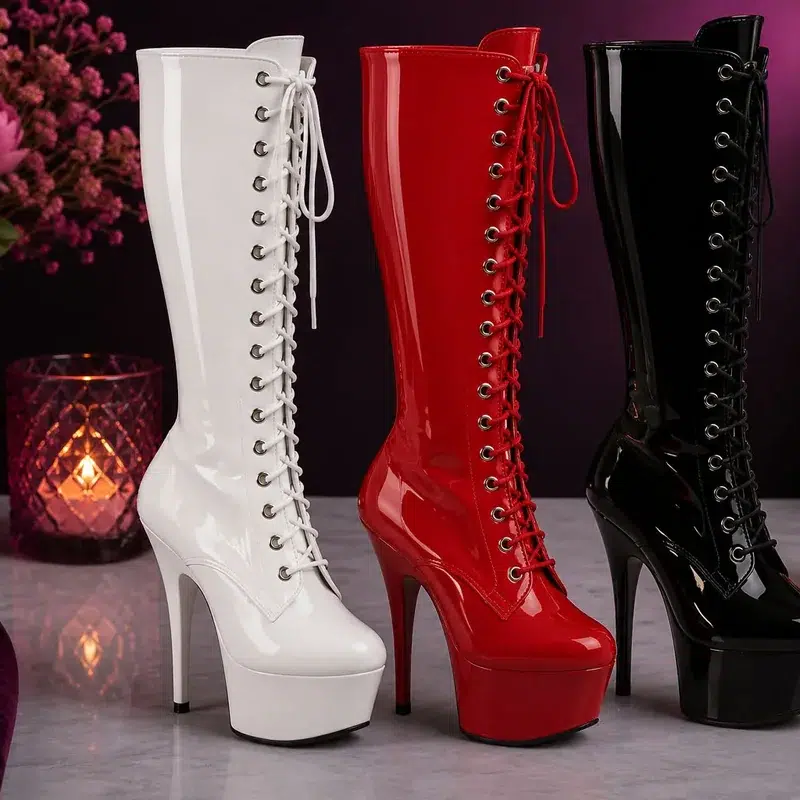
Knee-high boots
Elegant and classic, but fit depends heavily on calf circumference and shaft height.
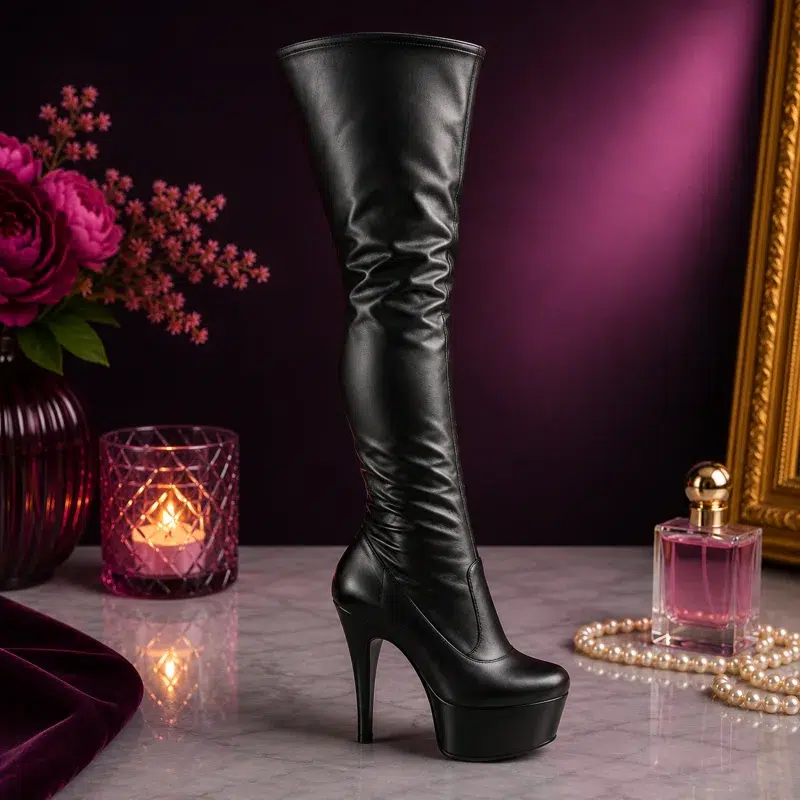
Thigh-high boots
A dramatic statement style. Check calf, knee and thigh fit, as well as how comfortably you can walk and sit.
A taller boot is not automatically more flattering or comfortable; proportion, fit and the outfit around it matter much more.
Before you order
What makes a boot fit comfortably?
| Check | Look for | Warning sign |
|---|---|---|
| Foot and toe box | Toes can rest naturally without pinching | Compressed toes, rubbing or numbness |
| Calf or thigh | Firm but not restrictive fit | Deep pressure marks or a zip under strain |
| Heel and sole | Stable footing and secure heel placement | Excessive slipping or unstable steps |
| Shaft and knee | Enough room to bend, walk and sit | Top digging in or excessive bunching |
| Fastening | Zip, lace or buckle closes smoothly | Pulling hard, trapped fabric or twisted seams |
Wider calves and larger feet
Look for clearly stated wide-calf measurements, stretch panels, adjustable lacing or boots designed for wider foot fittings. A stretch upper may help, but it cannot correct a boot that is fundamentally too small.
Choosing a heel height
A low or block heel is generally easier for a beginner than a very high narrow stiletto. Platforms also change how heel height feels, so think about both the heel and the sole construction.
Outfit inspiration
Styling feminine boots with confidence
With dresses and skirts
Knee-high boots can create a continuous, elegant line. Matching your tights to the boots can make the overall silhouette feel more streamlined.
With jeans and trousers
Ankle boots work beautifully with many cuts. Taller boots can also work over close-fitting trousers if the shaft allows enough room.
With hosiery
Opaque or sheer tights can make boots easier to coordinate with an outfit, but they may also slightly change how a close-fitting boot feels inside.
Frequently asked questions
Boot questions, answered
Are boots sized differently from women's shoes?
The foot size may follow the same brand chart, but boots add calf, shaft and sometimes thigh measurements. Compare the actual measurements of each style.
How do I know whether knee-high boots will fit my calves?
Measure the widest part of each calf while standing. Compare the larger measurement with the boot's stated calf circumference and check shaft height so the measurements relate to the same part of your leg.
What is the difference between wide fit and wide calf?
Wide fit often describes the part around the foot, while wide calf describes the circumference of the tall upper. Some boots provide both, but do not assume one includes the other.
Should I choose a bigger shoe size to fit my calves?
Not automatically. Going up a foot size may make the foot loose without providing enough extra calf room. Seek a correctly sized footbed with a suitable calf fit.
Are thigh-high boots suitable for beginners?
They can be, if the fit is right and the heel is manageable. For a first pair, a supportive style with a lower or wider heel is often easier to get accustomed to.
What if I cannot find calf measurements on a product?
Ask for the relevant measurements before ordering. A general size chart will not reliably tell you how a tall boot will fit around the leg.