Hair & Wig Accessories
Choose clips, headbands and wig accessories that sit comfortably and suit your style.
Hair and wig accessories can help keep a style in place, move a fringe away from your face or add a little detail to an outfit. I start by deciding what I want the accessory to do. A decorative clip and a wig grip solve different problems. The clip holds a section of hair or adds a detail, while the grip sits underneath the wig. Try one accessory at a time and see how the wig sits before you add anything else. That makes it easier to tell whether a piece helps or changes a fit you already like.
Hair and wig accessories for a fringe or side part
To hold a fringe back, start with a small section and a lightweight clip. Choose a place where the clip has enough hair to grip without pulling it tight. If the style is lace front, place the clip back from the hairline so it doesn’t tug on the lace. Look from the side to check whether a clip lifts the hair enough to show the cap underneath. For a decorative barrette, try clipping a small section at the side, then take a few steps and turn your head. If it slides, try a lighter clip or a position with more hair.
Choose a headband that sits evenly
A soft fabric headband can add colour without much weight. A rigid band may hold a shape you want, so check whether the ends press behind your ears or under the arms of your glasses. Put the wig on first, arrange the hairline and then lower the headband into place. With a lace front, start far enough behind the hairline to see how the band sits without pushing the lace down. If you wear a fringe, try it forward and swept to one side before deciding where to place the band. Take it off gently so the inside edge doesn’t catch the fibres.
Check cap fit before adding a liner or grip
If the wig shifts, look at how the cap sits on your head before adding an accessory underneath. Check the position of the ear tabs and whether the wig sits evenly at the nape. If it has adjusters, move them a little at a time and try the fit again. The Translife Wig Size Guide explains how to measure and check the cap. A liner may help keep your own hair flat, and a wig grip can give the cap something to sit against. Either adds a layer underneath, so check whether that extra thickness changes the way the wig fits.
Work with the cap construction
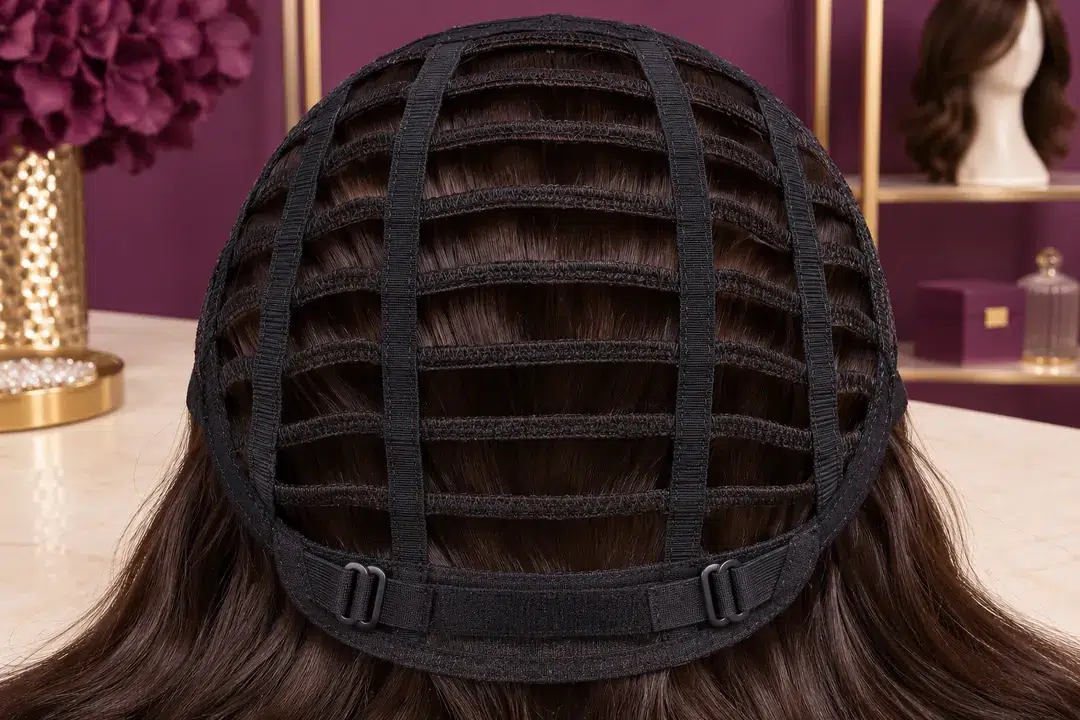
Hair and wig accessories sit differently on an open-weft cap, a monofilament top and a lace front. An open-weft cap may show more clearly if you pull a section tightly away from the head. At a hand-tied or lace area, keep pins and clips away from the fine material and use the hair itself to hold a light accessory. If you’re unsure where the cap changes construction, turn the wig inside out and inspect it on a clean surface before you put it on. The Wig Cap Construction & Fibres guide shows what to look for.
Try it with earrings, glasses and outer layers
A headband that feels comfortable by itself can sit differently once you put glasses on. Try putting the glasses on and taking them off with the band in place. For longer hair, check whether a clip keeps strands clear of your earrings or moves them closer to a fastening where they can catch. If you’ll wear a coat or scarf, put it on and take it off once before leaving. A style that sits flat around the nape often feels easier under a high collar. Try one clip or a soft band for a daytime outing, then decide whether you want a little more detail for an evening look.
Remove accessories gently and check the fibre
When you take out hair and wig accessories, support the section of hair with one hand and open the clip fully with the other. If a strand is caught, release it before pulling the piece away. Take the band or grip off before storing the wig so it doesn’t hold fibres in a bent position. For a lace-front style, check the edge for anything caught where you wore the accessory. The Translife Wig Care Guide covers brushing and storage. Keep the accessories that work with a particular wig together so you know which ones to reach for next time.